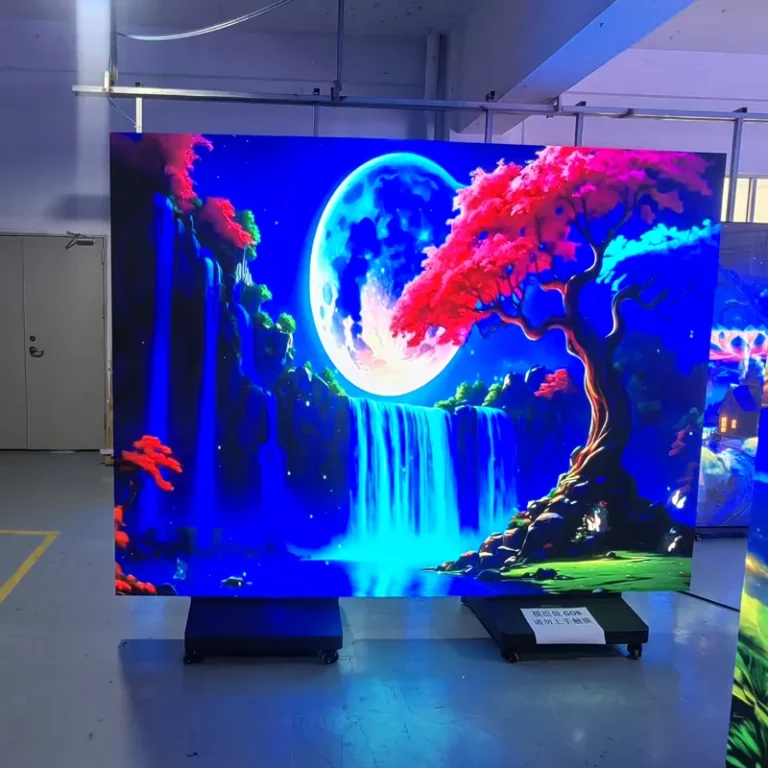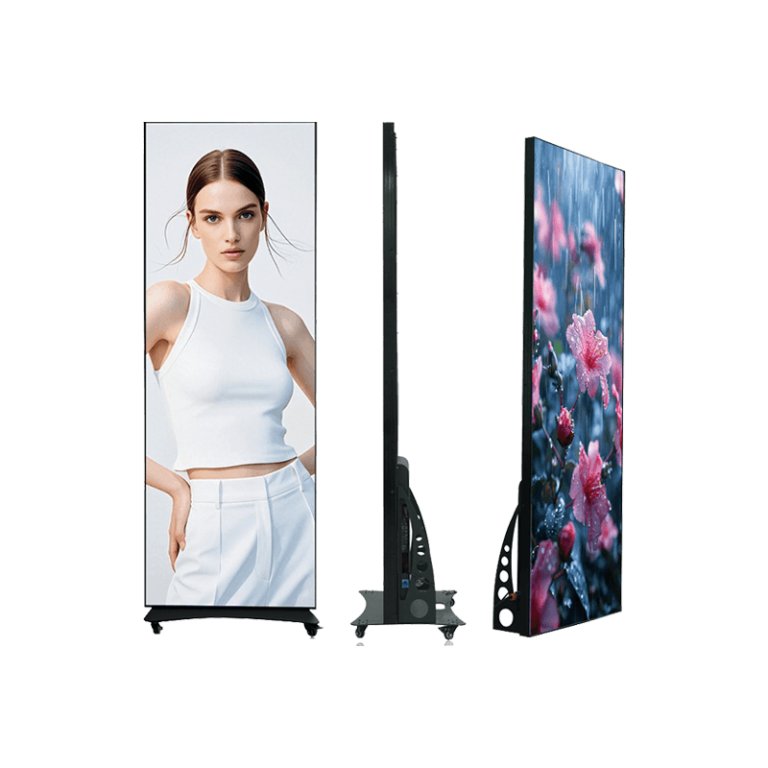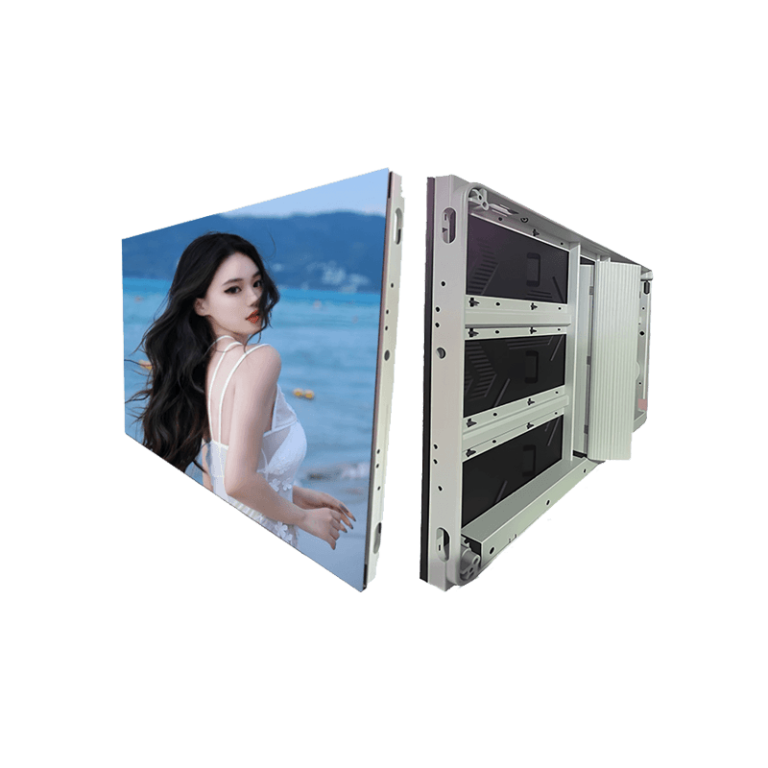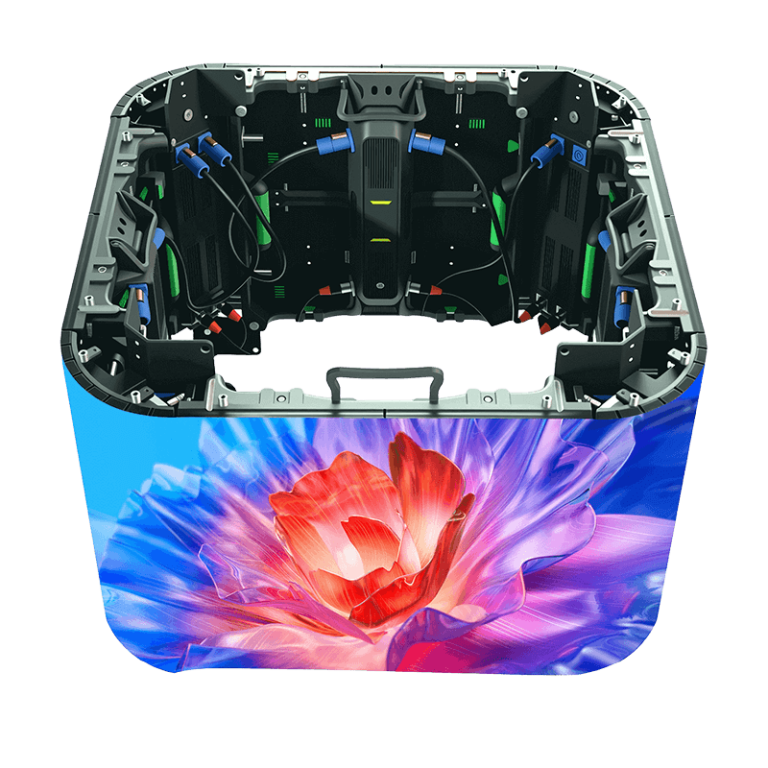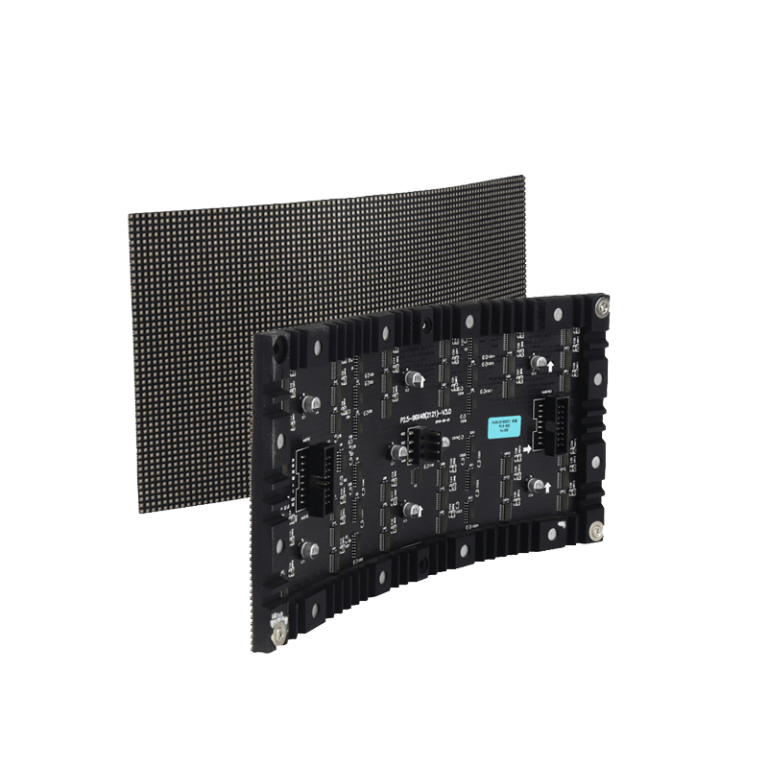
There is no standard LED volume size for commercial product work. A small stage can be enough for a tabletop launch film, a presenter with a product, or a series of controlled pack shots. A larger volume becomes useful when the camera needs to move, the product is tall or reflective, or the background must continue behind the subject without revealing an edge.
The mistake is to choose the wall from room dimensions alone. Product shoots are shaped by the lens, product footprint, working distance, camera path, light sources, and the amount of real floor that must blend with the virtual scene. A practical design starts with the hardest planned shot and leaves room for the team to work around it.
Start With the Product and the Camera
List the product dimensions, stand or turntable, talent position, camera height, lens range, closest focus, camera travel, and the background area visible in each shot. A compact bottle on a table has a different requirement from a vehicle, appliance, furniture piece, or full-height fashion product.
The camera needs enough distance to frame the product at the chosen focal length without placing the lens too close to the LED wall. The stage also needs room for the lighting team, tracking markers or tracking hardware, stands, crew movement, and safe access to the display. A volume that technically fits in the room may still be too small to produce the planned shots comfortably.
For a first calculation, draw the camera positions and the visible background for the widest lens. Mark the point where the wall leaves the frame. Then repeat for a tighter lens and a moving shot. The largest area is not always the best answer, but it shows where a small wall will force cropping, extra post work, or a second setup.
Separate Wall Area From Usable Stage Area
An LED studio screen is only one part of a product stage. The usable volume includes the wall, any curved corner, possible ceiling coverage, floor treatment, subject clearance, camera lane, lighting positions, and technical access. A wall can be wide enough for a background and still fail because the camera sees a bright seam or a hard transition at the floor.
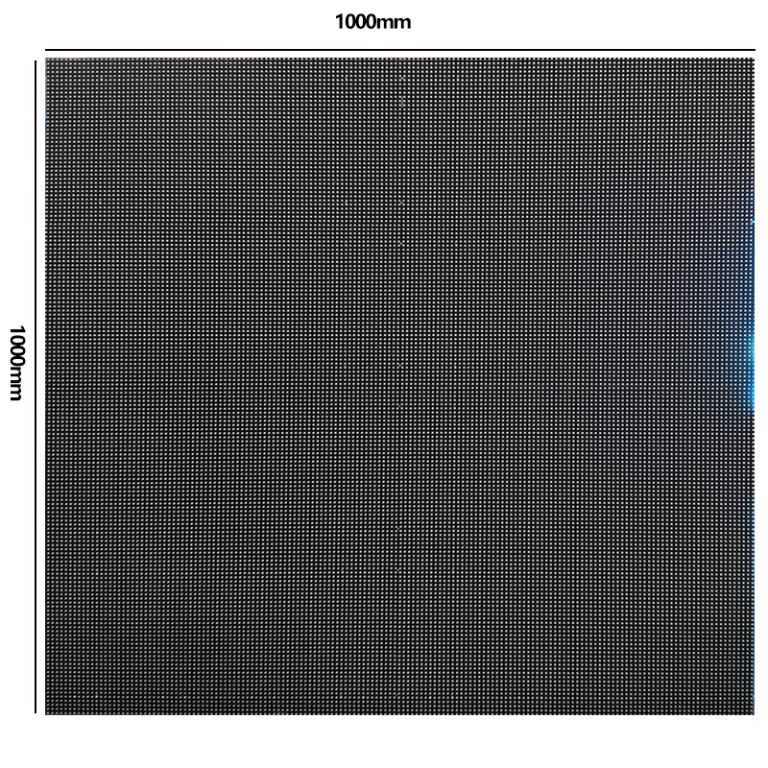
The display has common cabinet formats such as 500 x 500 mm and 500 x 1000 mm. Those dimensions help turn a visual concept into cabinet quantities, but they do not decide the room layout. The cabinet grid should be mapped against the content canvas, curve, service route, and support structure before the order is placed.
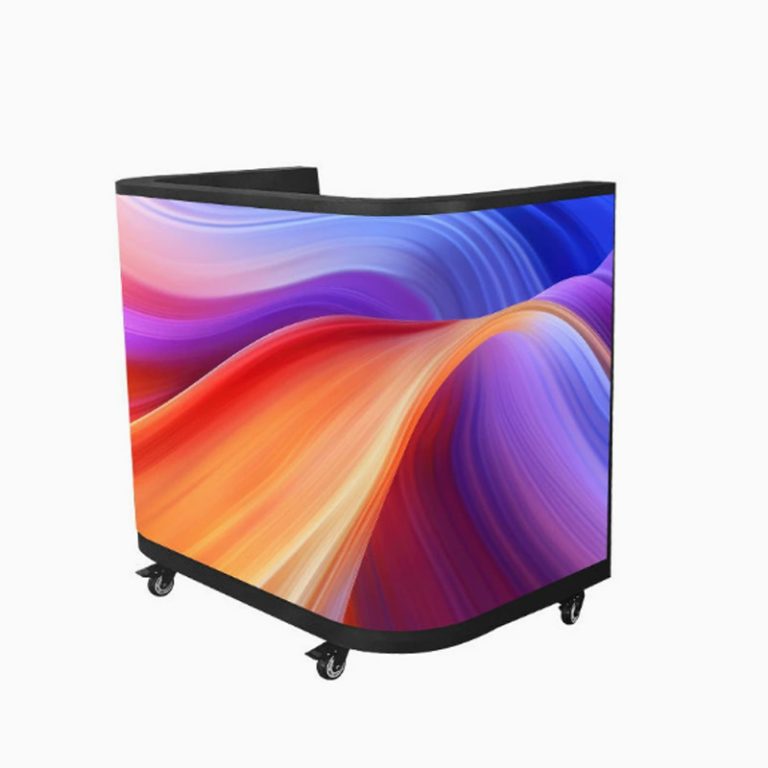
Curvature is useful when the camera needs a continuous background around a product. It also changes the distance from the lens to the pixels and can alter reflections on glossy surfaces. Test the actual radius and the nearest camera position. A flat wall demo cannot prove that a curved product background will remain clean.
Match Volume Depth to Product Reflections
Reflective and transparent products need more than a background rectangle. A glossy bottle may mirror a large part of the wall, a metallic appliance may reflect the curve, and clear packaging may reveal the colour and movement behind it. The wall needs enough size and placement flexibility for the image team to control what appears on those surfaces.
The required volume may be smaller when the product is matte, the shot is tight, and the background is intentionally soft. It may need to be larger when the product rotates, the camera circles it, or the virtual environment must provide a believable reflection across a broad surface. A larger wall does not automatically solve reflections, but it gives the lighting and content teams more options.
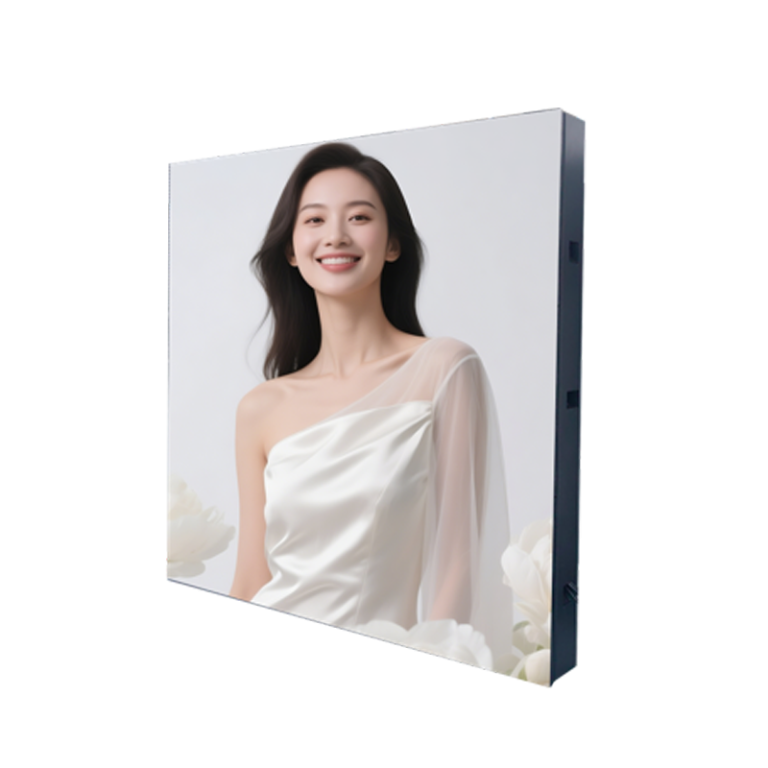
The indoor P3.91 display can be a useful reference for a camera-facing product wall brief because the quoted family provides a concrete indoor cabinet starting point. The chosen pitch still depends on camera distance, focus, content detail, and the required final image. Product shoots should be approved on footage rather than on a pitch label alone.
Three Practical Size Patterns
A compact product stage can use a focused wall behind a fixed camera lane. This suits tabletop campaigns, short-form product demonstrations, and pack shots where the subject occupies a limited part of the frame. The main checks are edge visibility, product reflections, talent clearance, and whether lighting equipment can be placed without contaminating the wall.
A medium volume adds a curve or a wider wall for presenter movement, turntables, and several product scales. It gives the crew more freedom to change framing without rebuilding the set. This format often makes sense for a commercial studio producing recurring campaigns, provided the room can support the wall, processors, power distribution, ventilation, and service access.
A large volume supports wider camera travel, tall subjects, vehicle-scale work, and scenes where the background must wrap beyond the primary lens direction. Its cost is not limited to more LED area. Structure, floor, processing, calibration, tracking, lighting, power, cooling, spares, and maintenance all grow with the system. The extra size should be tied to booked shot types or a realistic studio pipeline.
Do Not Size the Ceiling by Habit
Many product shoots do not need an LED ceiling. A wall may provide the background, while practical lights, diffusion, or a real ceiling handle the top of the frame. A ceiling becomes more useful when the camera tilts upward, the product reflects overhead content, the virtual scene requires a continuous sky or architecture, or the lighting design depends on a controllable image above the subject.
If the ceiling is included, keep a service and rigging plan beside the content plan. The ceiling adds weight, access work, pixel area, signal paths, and another surface that must match the wall. It can also change the light falling onto products. Test the combined image with the intended exposure and reflective materials before treating the ceiling as a visual upgrade.
The flexible display range may be relevant when a project needs a curved or spatially adaptable surface. A creative shape still requires a drawing, cabinet or module specification, curve limits, support design, and a camera test. Shape alone is not a substitute for useful stage depth.
Build a Size Brief That a Supplier Can Quote
Send a supplier the room drawing, ceiling height, door and lift dimensions, product list, largest subject, camera and lens package, closest focus, camera path, desired background coverage, reflective materials, lighting plan, content resolution, wall brightness, refresh requirement, and maintenance route.
Ask for a cabinet layout that marks seams, corners, floor transitions, service zones, and spare access. Request separate quantities for the wall, curve, ceiling (if any), processing, receiving systems, power, structure, calibration, tracking interfaces, and commissioning. The quote should identify what is included and what remains a site responsibility.
The creative LED display can be considered when the campaign depends on a non-rectangular or branded surface. For a recurring commercial studio, repeatability usually matters more than a one-off shape. The design should allow content teams to map scenes consistently and maintenance teams to reach modules without dismantling the whole set.
Choose the smallest volume that covers the hardest planned shot with a workable camera lane and safe crew access. Add area when the product scale, reflections, movement, or recurring bookings justify it. Leyaled provides a starting point for the hardware conversation, but the right LED volume size comes from a stage drawing and recorded camera test.
FAQ
Q1: How is LED volume size calculated for product videos?
A1: Map the largest product, camera positions, lenses, movement path, visible background, subject clearance, lighting positions, and floor or ceiling coverage. Then size the wall around the hardest shot, not room width alone.
Q2: Does a larger product video LED wall always create better reflections?
A2: No. It gives more control over reflected content and camera movement, but reflection quality also depends on wall placement, brightness, content, product finish, lens angle, and lighting. The complete setup needs a filmed test.
Q3: When does a commercial studio need an LED ceiling as well as a wall?
A3: A ceiling is useful when the camera sees above the subject, overhead content must appear on reflective surfaces, or the virtual environment needs continuous coverage. It should be added only after weight, access, signal, power, and service requirements are reviewed.