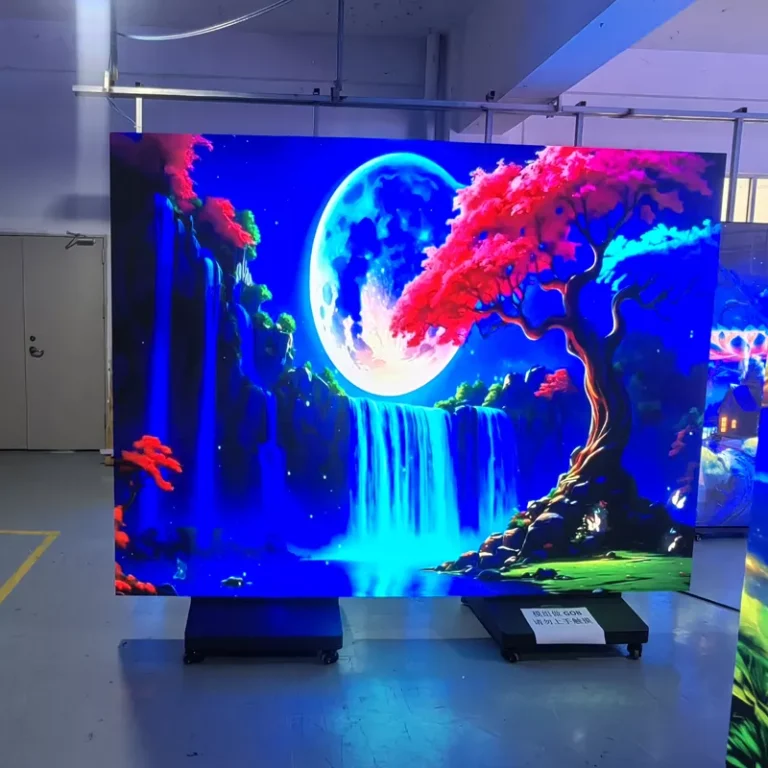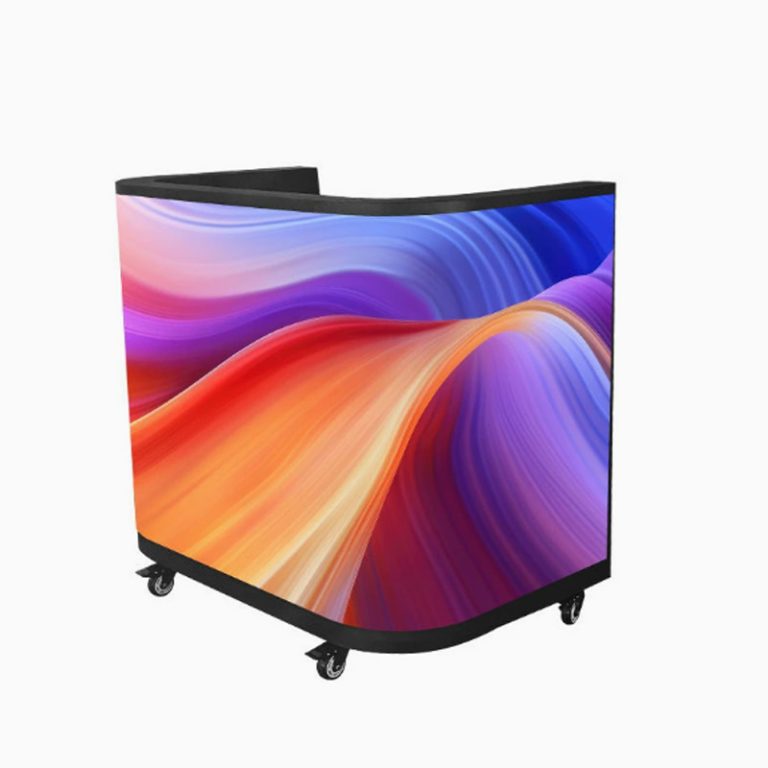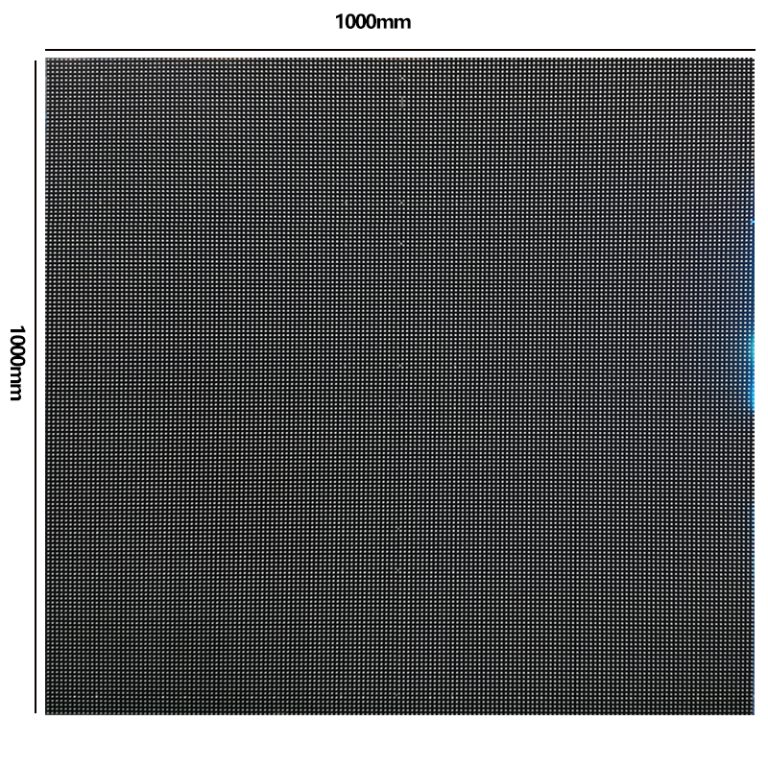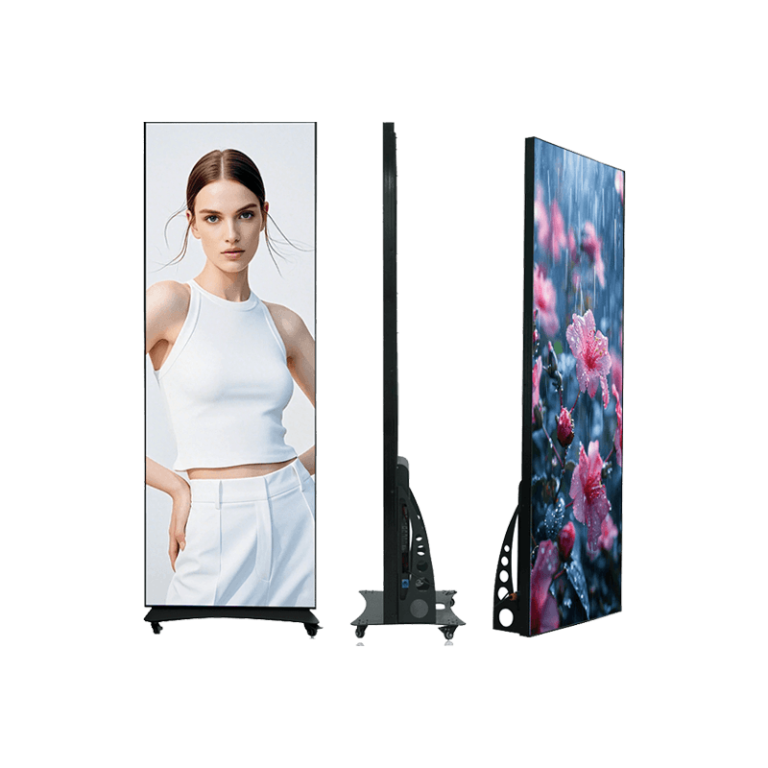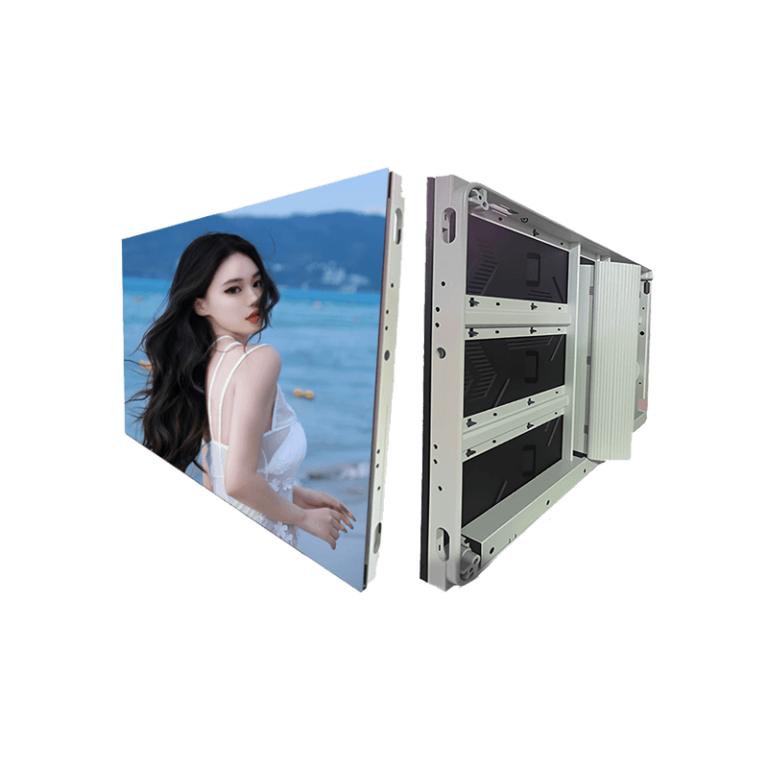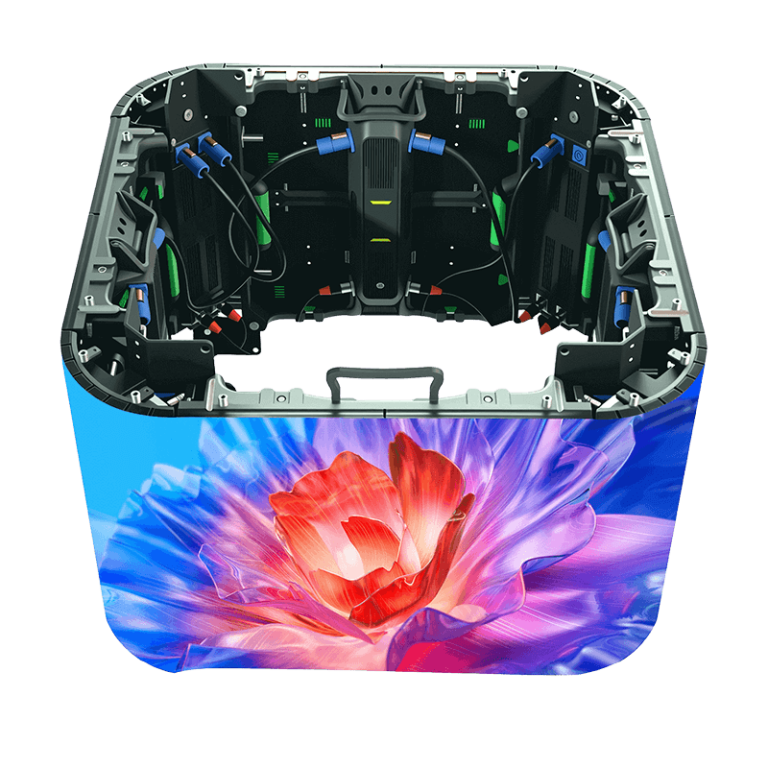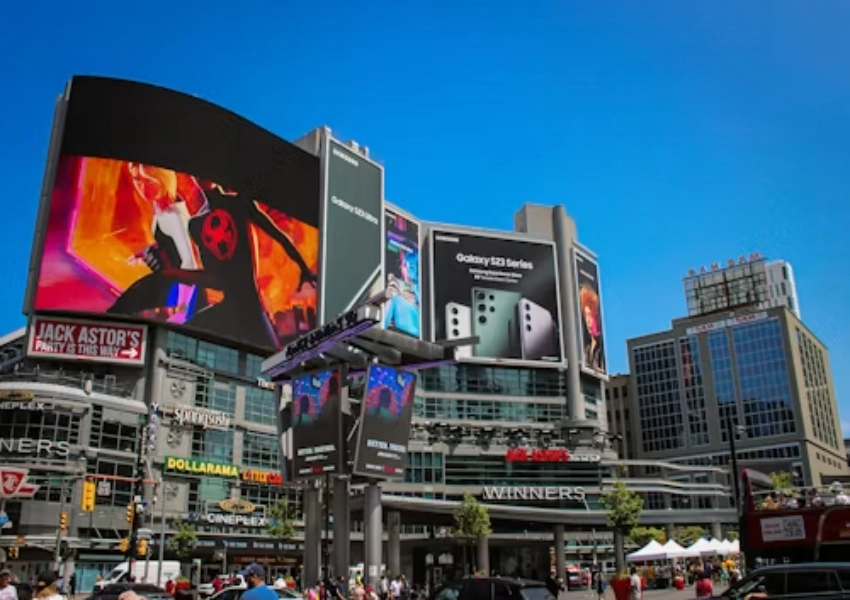
A building facade LED screen looks simple from the street: a bright digital surface mounted to architecture. Behind it, the service path can decide whether the project runs smoothly or becomes expensive to maintain. A front access outdoor LED display lets modules, power parts, or certain service points be reached from the display face. That can be essential when the screen is mounted directly against a wall, built into a narrow facade, or placed where rear access is blocked.
Not every outdoor fixed LED display needs front access. If the structure has a safe rear corridor and enough working room, rear service can still be practical. The question is not which design sounds more advanced. The question is whether a technician can safely reach the parts that will eventually need attention without dismantling too much of the installation.
Front Access Matters When the Building Leaves No Rear Space
Many facade projects have limited depth. Architects may want the screen to sit close to the wall to keep the building profile clean. Shopping centers, hotels, transportation hubs, and office towers often have structural columns, glass, cladding, ventilation ducts, or tenant space behind the screen. In those cases, a rear maintenance passage may be unrealistic.
A front service LED screen solves this by making the display face the working side. Modules can be reached from the front with suitable tools, reducing the need to open the building side. For a wall-mounted outdoor LED display, this can save space and make future service less disruptive to tenants and interior areas.
When Rear Access Is Still Better
Rear access can be easier for very large screens with a dedicated steel frame and service walkway. Technicians have room to work, cables can be organized clearly, and weather sealing may be easier to inspect. If the site has enough depth and safe access, front access is not automatically required.
When Front Access Becomes Necessary
Front access becomes important when the screen is flush mounted, embedded, close to glass, or installed over finished interior space. It is also useful when the building owner wants to reduce service visits inside the property.
Facade Screens Need Structural and Weather Planning
Outdoor facade screens face wind, rain, UV exposure, heat, dust, and sometimes salt or industrial air. Strong waterproof and dustproof design for outdoor screens, often IP65 at the front and IP54 or higher at the rear, with operating temperature planning around -20°C to 50°C. It also notes that heat dissipation should be reviewed carefully because poor thermal design can shorten screen life.
A building facade LED screen adds another layer: the wall itself affects airflow and drainage. If the screen is mounted too close to the surface with no planned ventilation, heat may build up. If the cable entry and cabinet joints are weak, rainwater can collect. If the frame ignores wind load, the display can move, loosen, or deform over time.
This is why front access should be discussed together with cabinet depth, bracket design, drainage, grounding, lightning protection, and module replacement methods. A serviceable screen is not just easier to repair. It is easier to keep stable over years of outdoor work.
Pixel Pitch and Brightness Still Depend on Viewing Distance
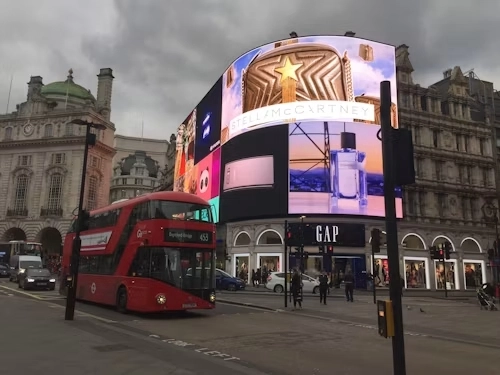
A facade screen may be viewed from across a road, from a plaza, or from a sidewalk right below the building. These positions need different pixel pitches. The industry rule is direct: closer viewing calls for a smaller pitch, while longer viewing distances can use a wider pitch with better cost control. A fine pitch makes more sense for close retail or transport facades; a wider pitch may work for a high-mounted outdoor advertising face.
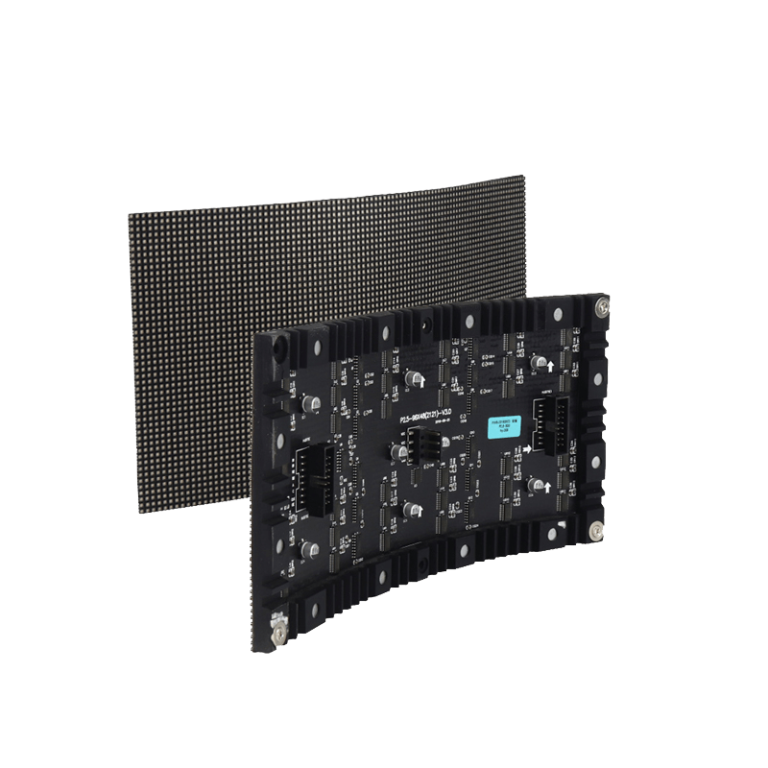
لياليد عرض في الهواء الطلق ب2.604 is a useful example for close and semi-close outdoor scenes, with a 2.6 mm pitch, wide viewing, high refresh, and 10,000 nits brightness for direct sunlight. It also supports mixed 500 x 500 mm and 500 x 1000 mm cabinet splicing, and it has curved locks for elliptical forms and uneven surfaces. Those details matter when a facade is not a perfect flat rectangle.
For installations where cabinet profile and body structure are central to the design, the profile aluminum الصمام عرض is worth reviewing as a structural reference. The buyer should not only ask for pitch and square meters. Cabinet weight, depth, mounting method, flatness, and access method should sit in the same comparison table.
Service Access Affects Downtime and Property Disruption
A front access outdoor LED display can reduce downtime when a module, power supply, or cable section needs attention. The technician can work from the visible side, depending on site equipment and safety rules. For a busy retail facade, this may mean repairs happen before opening hours with less impact on stores. For a transport hub, it may reduce the need to enter back-of-house spaces.
Outdoor screens can have higher after-sales maintenance costs than indoor ones, so buyers should consider energy use, service cost, and access early. That point is easy to miss during procurement. A lower-cost rear-service design may become more expensive if every visit requires scaffolding, interior disruption, or partial dismantling.
Ask These Questions Before Ordering
Can every module be reached safely? Does the frame leave enough room for ventilation? How are water and dust sealed at the front? Will a service technician need to enter the building? Are spare modules and calibration data available? How long does a typical module replacement take?
Do Not Ignore the Viewing Angle
Facade screens are often seen from sharp side angles. Wide viewing angle and uniform color help the display stay useful for pedestrians and drivers approaching from different directions.
Supplier Capability Should Match the Building Risk
A facade screen is a construction-adjacent display project, not a loose screen purchase. It needs shop drawings, mounting coordination, waterproofing decisions, and maintenance planning. Leyaled’s fixed الصمام عرضcategory fits this direction because fixed installations need stable structure and a clear service plan. The شاشة الملعب product page is also useful as a protection reference, with high brightness, IP65 rating, wide viewing angle, and front/back maintenance wording in a demanding outdoor-adjacent use case.
Leyaled supports LED display R&D, production, and project implementation from a 7,000-square-meter Shenzhen factory. Its knowledge base points to automated production lines, high-quality LED beads and driver chips, 72 hours of factory testing, brightness decay tests, on-site installation, a 3-year free warranty, lifetime technical support, 24-hour response, and 48-hour on-site repair for qualifying issues. For facade buyers, those details help separate a display quote from a project-ready supply plan.
استنتاج
Front access is necessary when the building itself leaves no practical rear service path. For a wall-mounted outdoor LED display, that can be the difference between a manageable module repair and a costly property disruption. The best choice comes from the site: facade depth, viewing distance, wind, rain, heat, cabinet weight, and technician access. A buyer comparing لمقاطعة options should place front access, weather protection, and service planning beside the screen price from the start.
أسئلة متكررة
Q1: When is a front-access outdoor LED display necessary?
A1: It is necessary when rear access is blocked, unsafe, too narrow, or disruptive to the building’s interior use.
Q2: Is front service always more expensive?
A2: It can raise the starting price, but it may lower future service costs when rear access would require extra labor or building work.
Q3: What should be checked for a facade LED screen?
A3: Check wind load, waterproofing, heat dissipation, mounting depth, service path, pixel pitch, brightness, and spare-part availability.