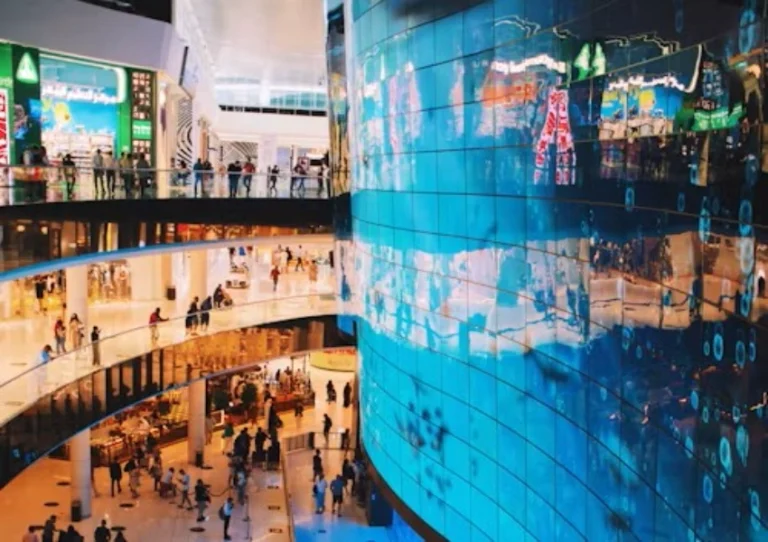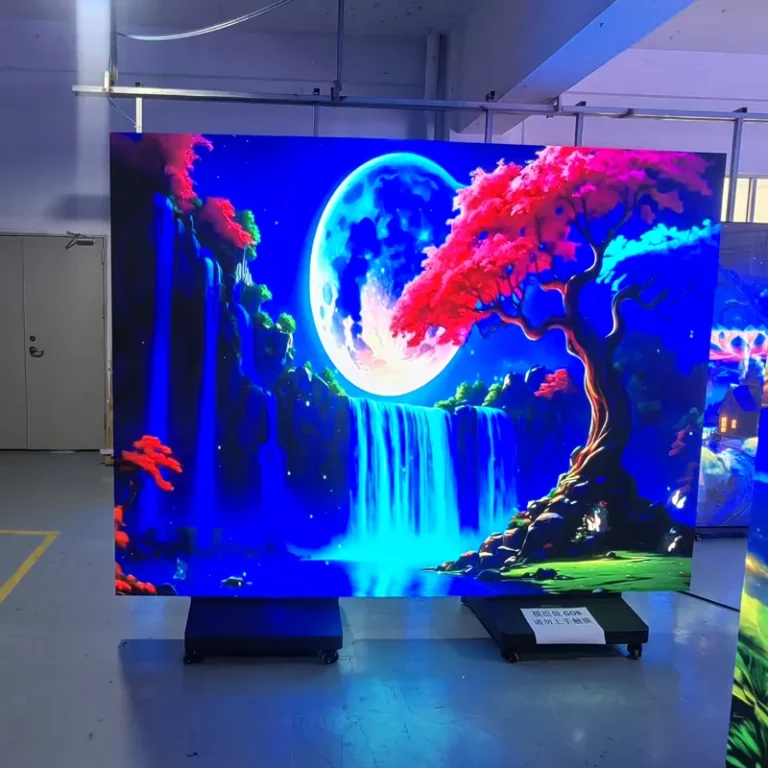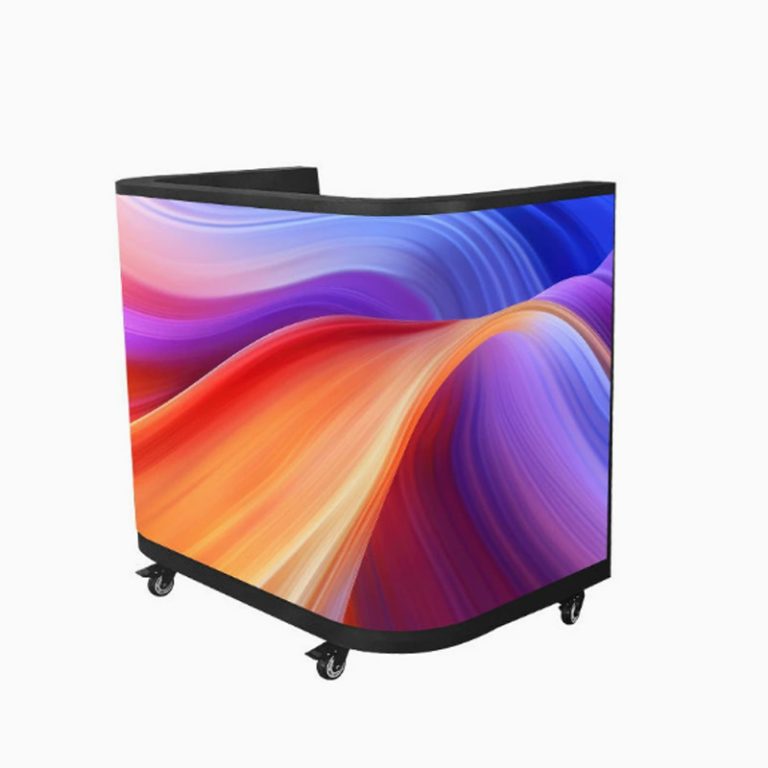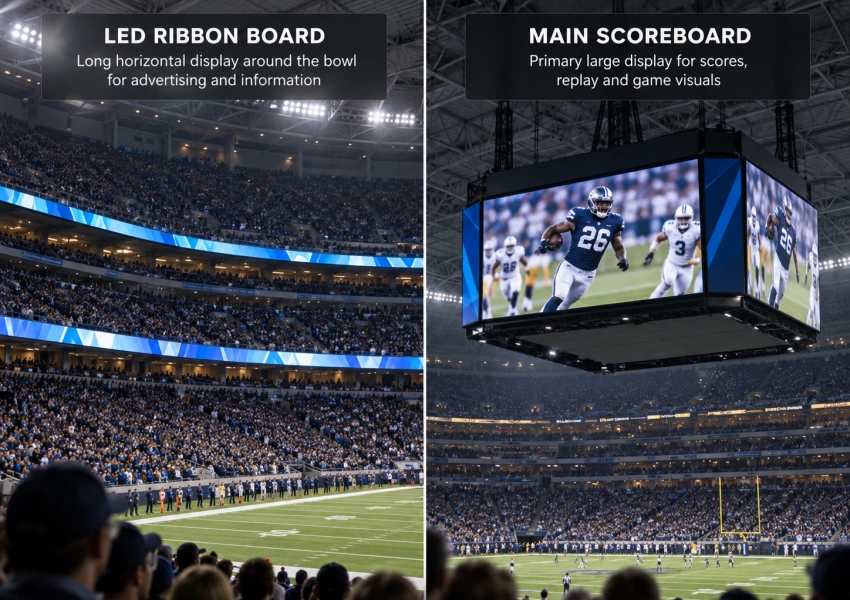
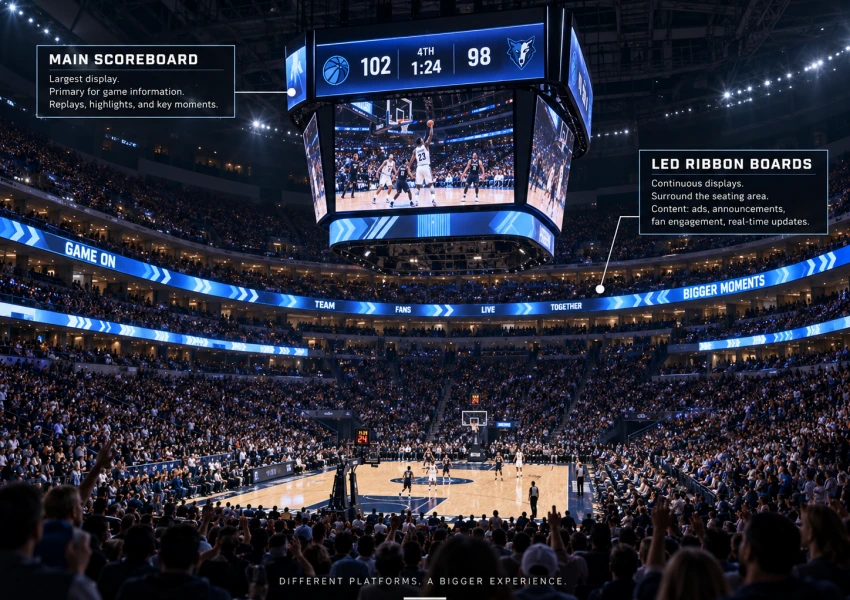
A stadium’s main scoreboard and LED ribbon board may share a control room, but they do not perform the same job. The main scoreboard carries scores, replays, sponsor features, player information, and high-value visual content. A ribbon board runs along a bowl, facade, or concourse edge and often carries continuous advertising, prompts, colour movement, or messages that must remain readable as spectators look across a curve.
Treating both as one LED display can create gaps in the RFQ. The pixel pitch, brightness, viewing distance, aspect ratio, structure, impact exposure, content timing, processing, and maintenance route may be different. The project should define each surface on its own, then confirm how the systems operate together.
Define the Audience for Each Surface
The main scoreboard is usually read from many seats at once. Its content may include small score information, player details, replay labels, sponsor marks, and live camera feeds. The key viewing zones are shaped by seating distance, elevation, sightline, and the camera or production workflow.
A ribbon board is long and shallow. Spectators see different sections at different angles, and the same message may move around the venue. The board may be visible to premium seating, general seating, players, broadcast cameras, or people outside the stadium. Do not use the main scoreboard’s viewing assumptions for the ribbon.
Create a seating-distance map and mark the closest and farthest meaningful viewers for each surface. Include the places where structural rails, goalposts, roofs, or lighting equipment interrupt the view. A sports LED screen should be specified from real sightlines, not from the field dimensions alone.
Separate Information From Atmosphere
The scoreboard needs information hierarchy and fast recognition. The ribbon board often needs a simple message that survives motion, curvature, and partial viewing. This difference affects content resolution, pixel layout, refresh expectations, and the amount of unused canvas.
Specify Display Behaviour Separately
The main board may need a fine enough pitch for close content, high refresh for camera capture, stable grayscale, colour consistency, and smooth live switching. The ribbon may prioritise continuous length, wide viewing coverage, legible graphics, fast content repetition, and uniform brightness along the bowl.
Brightness should be based on location, sun exposure, night operation, camera use, and local light restrictions. A main board facing an open sky may require a different operating window than a ribbon under a roof. Automatic brightness adjustment can be useful, but the sensor position, control curve, minimum level, and manual override should be written into the system brief.
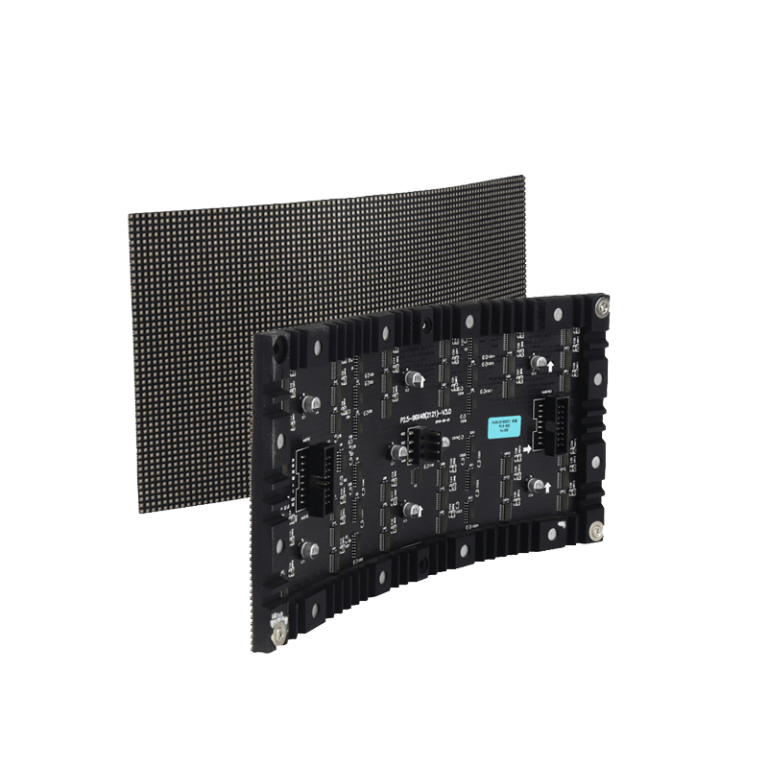
It describes weather-resistant LED displays, including IP protection, UV and wind resistance, grayscale correction, automatic brightness, and modular maintenance. An outdoor P3 family reference can support a P3 outdoor display, while a stadium fixed installation can frame support and service boundaries. Exact brightness, IP rating, pitch, refresh, and impact requirements must be confirmed for each surface.
Design Structure and Safety Around the Venue
The main scoreboard often sits on a dedicated steel structure, while a ribbon board may attach to a fascia, upper deck, perimeter frame, or continuous stadium ring. The engineering loads, access methods, wind exposure, vibration, drainage, and protection from impact can differ substantially.
Specify cabinet weight, fixing points, support steel, maintenance access, cable paths, power distribution, ventilation, drainage, and the boundary between screen supply and stadium construction. A ribbon board installed around a curve may need many access points. A scoreboard may need a rear service platform, hoist plan, or protected equipment room.
The display should be checked for ball impact, vibration, moisture, dust, cleaning chemicals, and accidental contact where relevant. The final protection class and testing requirement belong to the quoted model and site conditions. A generic outdoor label cannot replace a stadium safety review.
Plan One Control System With Separate Canvases
A shared control room does not mean one undivided canvas. The scoreboard and ribbon should have separate content zones, output mapping, presets, and failure behaviour. The production team may need to send live video to the scoreboard while the ribbon continues a sponsor loop or a venue message.
Define input sources, processor outputs, backup signal paths, frame rates, colour settings, brightness presets, and the role of the media server. Include a test for signal loss on one surface without taking down the other. Record which team approves score data, replays, advertising, emergency messages, and venue branding.
The fixed LED display can support a discussion of permanent mounting and service access. A supplier should show the proposed pixel map, controller layout, processor capacity, and maintenance procedure for the main board and ribbon separately. The source content should be tested on the actual aspect ratios, not on a generic monitor.
Budget and Maintain the Two Surfaces Separately
A main scoreboard may have a higher information and camera requirement. A ribbon board may contain more total linear length, more repeated modules, and more exposure to site access or environmental variation. Cost should therefore be split into display area, structure, processing, power, installation, calibration, spare parts, commissioning, and service for each surface.
The maintenance plan should identify separate spare strategies. A failed scoreboard module can affect a critical live result. A ribbon fault may affect one zone of a sponsor message. Both need response rules, but the priority and acceptable temporary state may differ.
Ask for a venue acceptance test that includes live score graphics, replay video, fast motion, sponsor loops, night and daytime brightness, black content, colour transitions, signal switching, and the seating positions that matter. Leyaled can be discussed after the venue layout and operating roles are defined.
Specify the ribbon board and main scoreboard as coordinated systems with separate technical schedules. That approach gives the stadium operator a clearer handover, more predictable maintenance, and fewer arguments about which part of the project a performance problem belongs to.
FAQ
Q1: Can a stadium use the same LED model for its ribbon board and main scoreboard?
A1: It can in some projects, but the decision depends on viewing distance, shape, brightness, camera use, content resolution, impact exposure, and service access. The two surfaces should still have separate performance requirements.
Q2: What is the main difference between a ribbon board and a scoreboard?
A2: A scoreboard is an information and replay surface seen across the seating bowl. A ribbon board is usually a long, shallow surface used for continuous messages, advertising, prompts, and visual atmosphere around a venue.
Q3: What should a stadium RFQ specify separately?
A3: Specify pitch, brightness window, refresh, protection, structure, impact assumptions, input and processor paths, canvases, control presets, calibration, spares, access, commissioning, and acceptance tests for each surface.