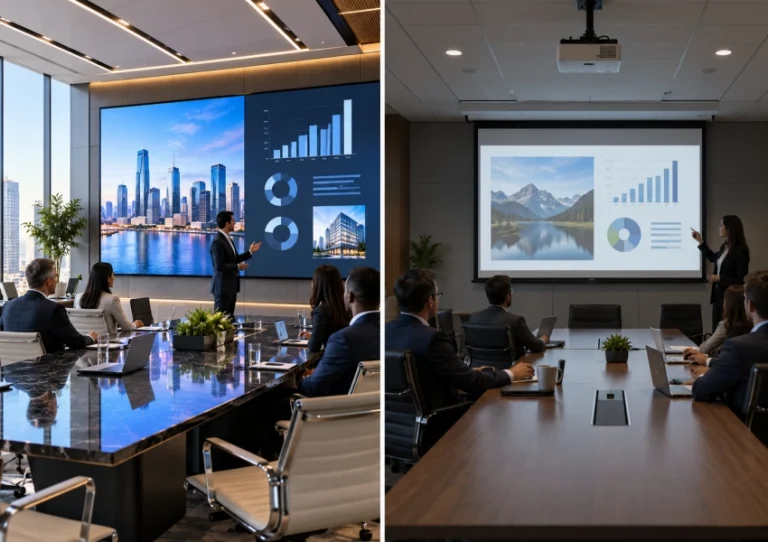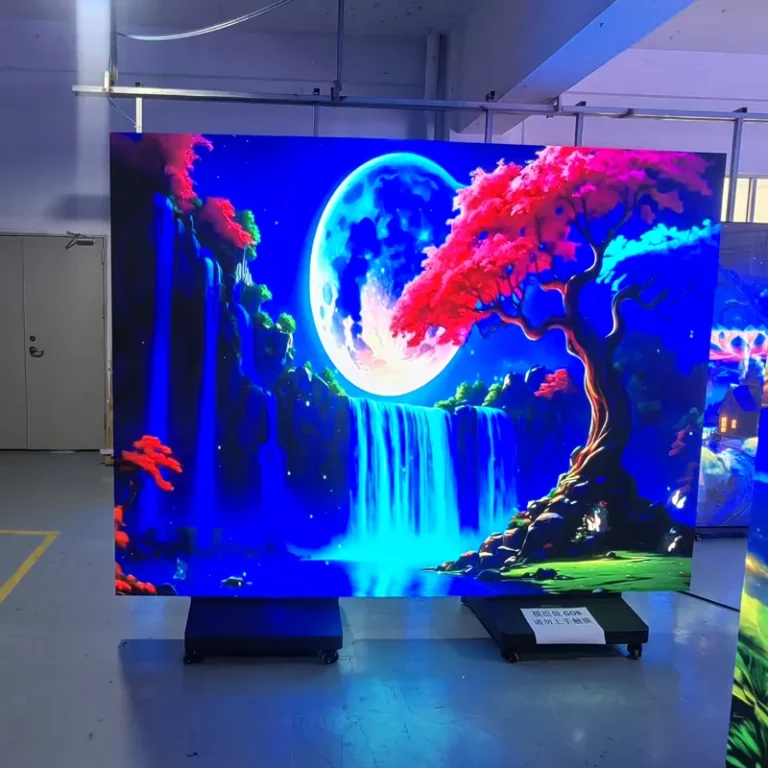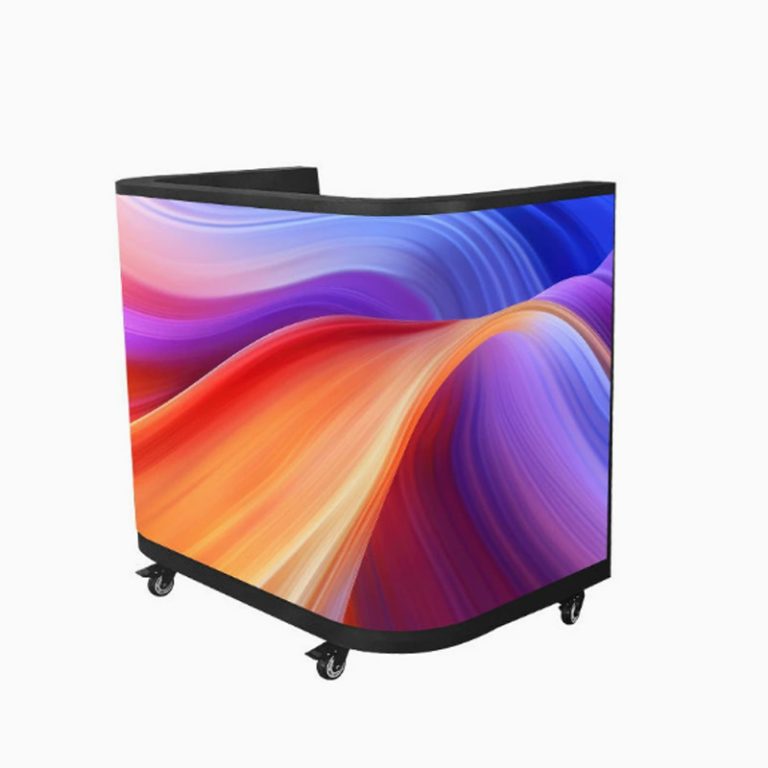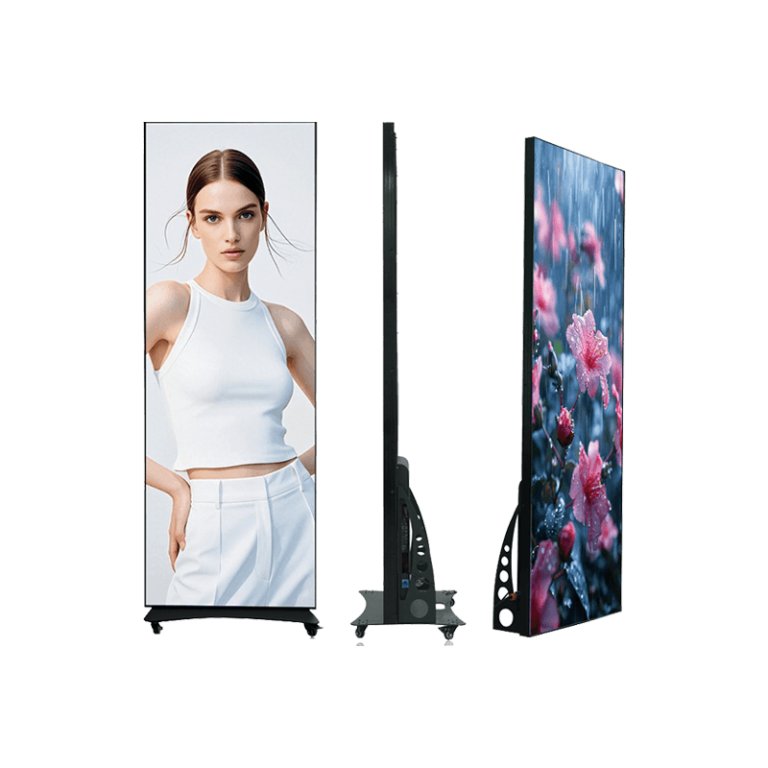
A P1.86 foldable LED screen and a conventional video wall can both deliver a sharp image in a meeting room. The real difference is not just pixel pitch. It is what happens before the meeting, when the room layout changes, when a camera goes live, and when the screen must be stored between sessions. Teams that buy only on resolution can end up with a polished display that is awkward for the way their rooms actually operate. A foldable screen is a finished, mobile display format. A conventional video wall is usually a fixed installation with a dedicated support and signal plan. One offers fast room changeovers; the other often offers a permanent large canvas. Both can be right.
Meeting Workflow Is the First Decision
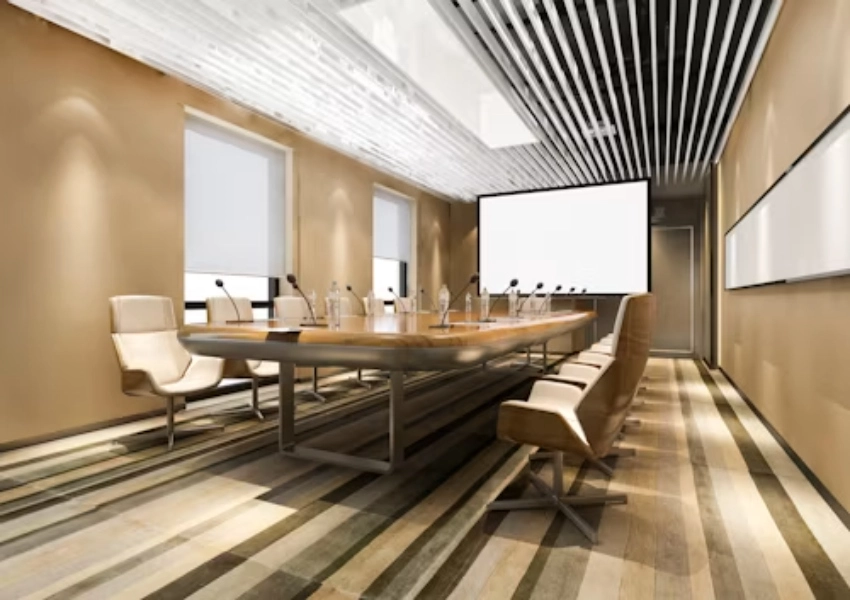
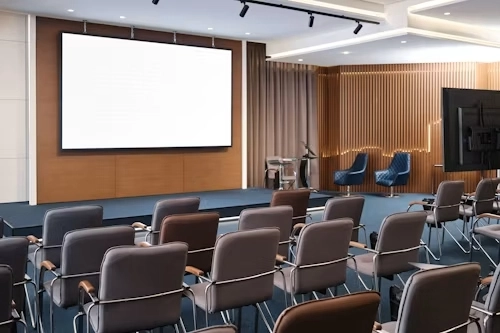
A conference room LED screen that stays in one boardroom can be built around the seating plan, wall structure, power route, and viewing angles. The display becomes part of the room. It can be wider than a movable unit, and it may integrate more cleanly with conferencing hardware. That makes sense for executive briefings, control rooms, or spaces where the layout rarely changes.
A foldable LED screen is a better fit where the same display moves between training rooms, a reception area, an exhibition booth, and a temporary stage. It is a foldable, compact unit with universal wheels and plug-and-play operation. It can be used as a single poster display or combined into a larger picture, which reduces the setup burden for an internal events team.
Deployment Time Includes More Than Power–On
A portable LED video wall may be ready to roll into a room quickly, but the team still needs to confirm door widths, lift capacity, floor transitions, parking position, power, network, camera framing, and sightlines. A conventional wall avoids repeated moving work but requires more commitment at the fit-out stage. For meetings that move weekly, the folding format can save a surprising amount of coordination.
P1.86 Detail Matters at Close Seating Distances
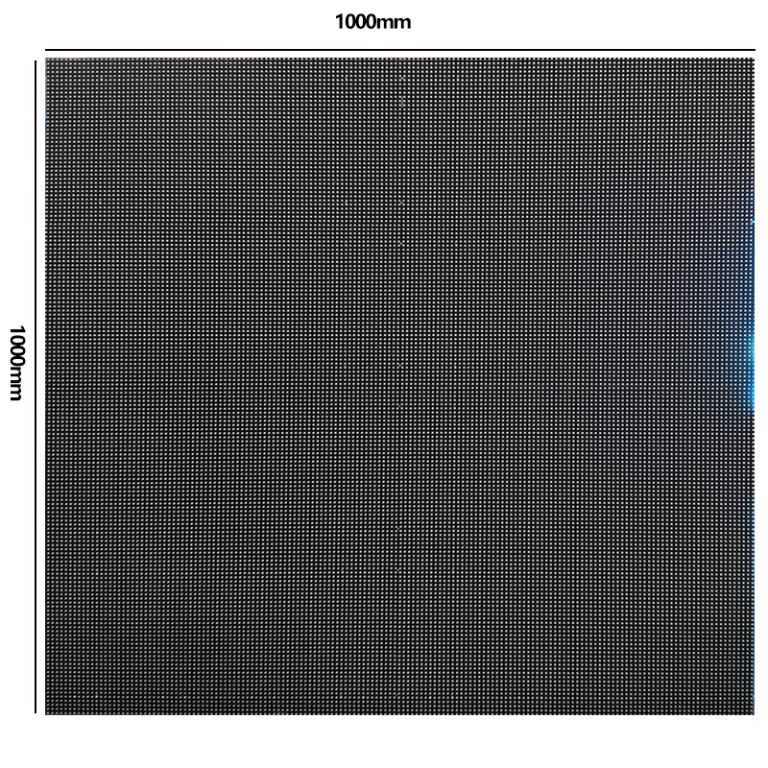
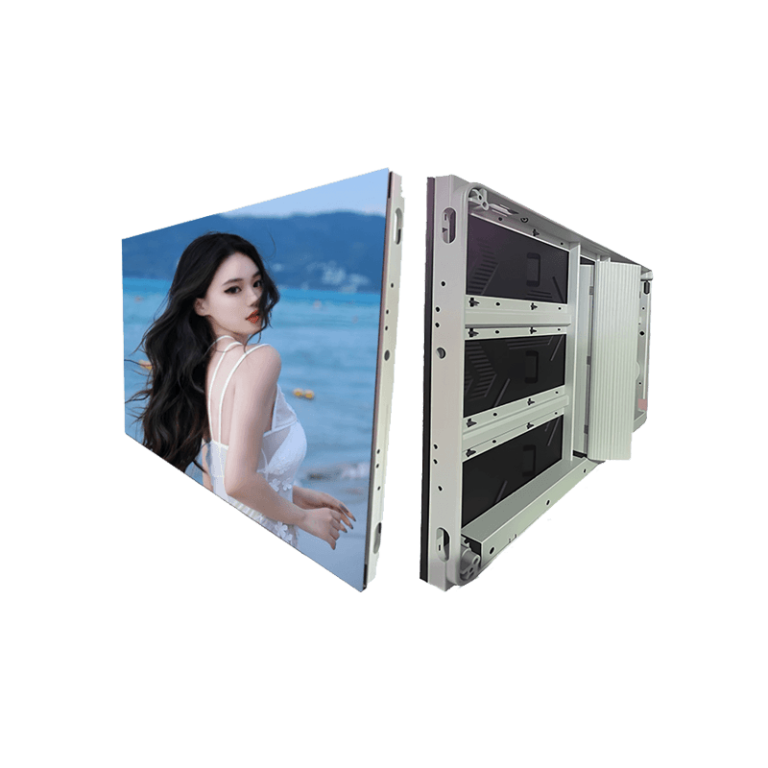
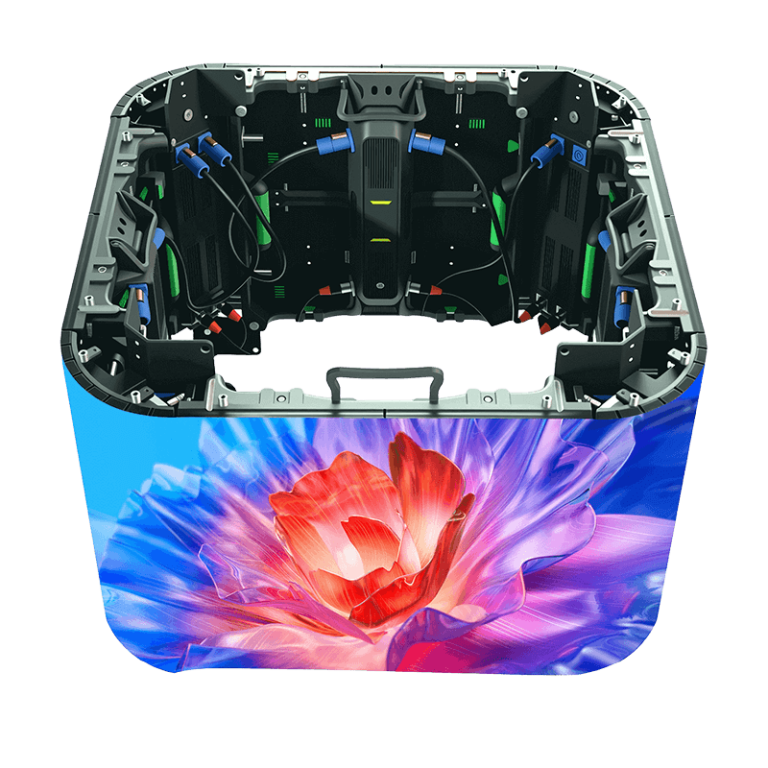
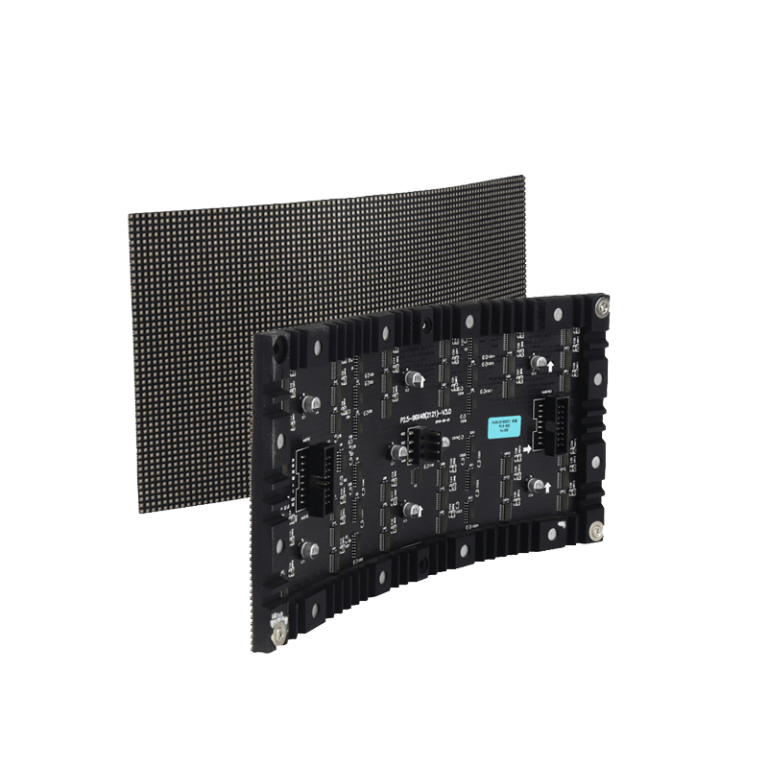
P1.86 LED display specifications are relevant when people sit relatively close and read shared documents, presenter graphics, dashboards, or faces on a video call. Leyaled has a P1.86 indoor die-cast aluminum cabinet with 640 x 480 mm cabinet dimensions, 364 x 258 cabinet resolution, 600-800 cd per square meter white-balance brightness, and a 3,840-7,680 Hz refresh range. Use those as a reference point, then verify the exact product configuration being quoted.
Fine pitch does not rescue a poor content workflow. Small text needs enough contrast and a sensible size. A video caller needs an image that does not crush shadow detail. The meeting platform, processor, laptop output, and screen scaling all need a short pre-event check. A P1.86 three-fold LED screen is useful for evaluating mobile fine-pitch options, while the final choice must follow the nearest viewer and the content people actually share.
Live Streaming Adds Camera Requirements
An LED screen for live streaming becomes part of the shot. It needs an appropriate refresh and scan configuration for the planned camera, stable brightness at the chosen exposure, and content without distracting high-frequency patterns. The wall should be tested with the production camera, not just a phone. Scan bands, flicker, moire, and color shifts can appear only after shutter, frame rate, lens, and brightness are set together.
A fixed wall gives the camera crew a consistent background position. A foldable unit gives production teams the freedom to place the screen where the session needs it, but that makes repeatable marks important. Record the screen angle, camera distance, height, processor preset, and lighting position after a successful stream. That simple discipline makes the next session much easier to recreate.
Storage Is Part of the Cost
Conventional video walls do not need storage, though they need planned maintenance access. A foldable unit needs a dry, protected place where doors are not bumped, wheels are locked, and power and signal accessories stay with the screen. Check the folded footprint and route to storage before purchasing. A screen that cannot pass a corridor or fit in the equipment room will lose most of its mobility advantage.
Compare the Whole Room Change
A fixed video wall usually needs structural mounting, display alignment, cable routing, commissioning, and a service method. Those steps take time, but they produce a clean permanent installation. The wall can be made to suit the architecture and a stable conference camera position. A fine-pitch indoor display is the right product for conversation when a room needs that dedicated, close-viewing screen.
The foldable alternative shifts the project to operational details: unit weight, wheels, power connection, signal input, unfolding area, secure parking, and content presets. It does not demand the same wall construction, but it should not be treated as a casual office appliance. Ask who moves it, who has authority to connect it, and how the screen is checked before each public or streamed session.
Match the Product to the Programme
Choose a foldable LED screen when meeting rooms change frequently, one display must serve several locations, setup teams are small, or an organization needs a camera-facing background without permanent building work. Choose a conventional video wall when the room is dedicated, the display is used daily, a larger image is needed, and fixed integration with AV and furniture is worth the initial construction.
For a later technical review, an indoor LED display can help frame cabinet pitch, brightness, inputs, and service needs, while Leyaled provides the route for a deployment drawing and sample test. Leyaled has mobile, foldable structures and fine-pitch indoor cabinet formats. The buyer should ask for a real room demonstration, including a short live stream, rather than make the decision from a product photo. Looking for the best quality products? Here, it’s all about giving the clients the best quality products.
FAQ
Q1: Is a P1.86 foldable LED screen good for video calls?
A1: It can be. Test the exact screen, processor, brightness, content, and camera settings together. Close seating and camera use make pixel pitch, refresh rate, and scaling more important.
Q2: Can a foldable screen replace a fixed video wall?
A2: It can replace one where mobility and flexible room use matter more than permanent integration. A fixed wall is usually stronger for a dedicated, large, daily-use meeting space.
Q3: What should be checked before buying a mobile LED display?
A3: Check folded dimensions, weight, wheels, door and lift routes, storage, power, inputs, service support, screen position, and a camera test with normal meeting content.