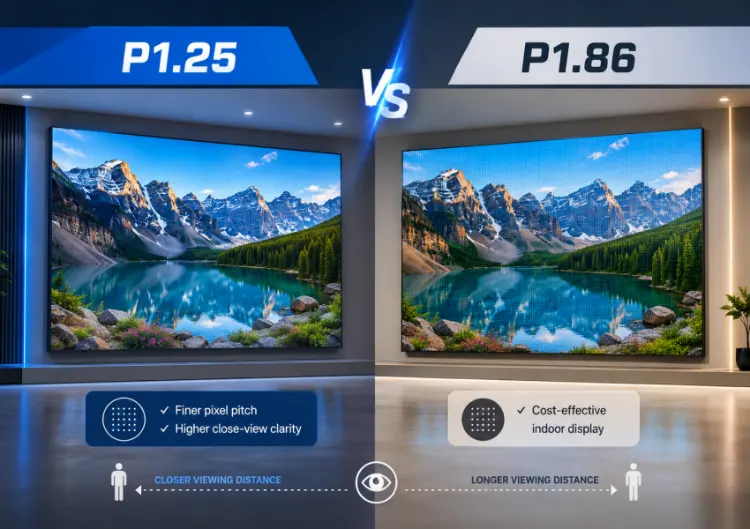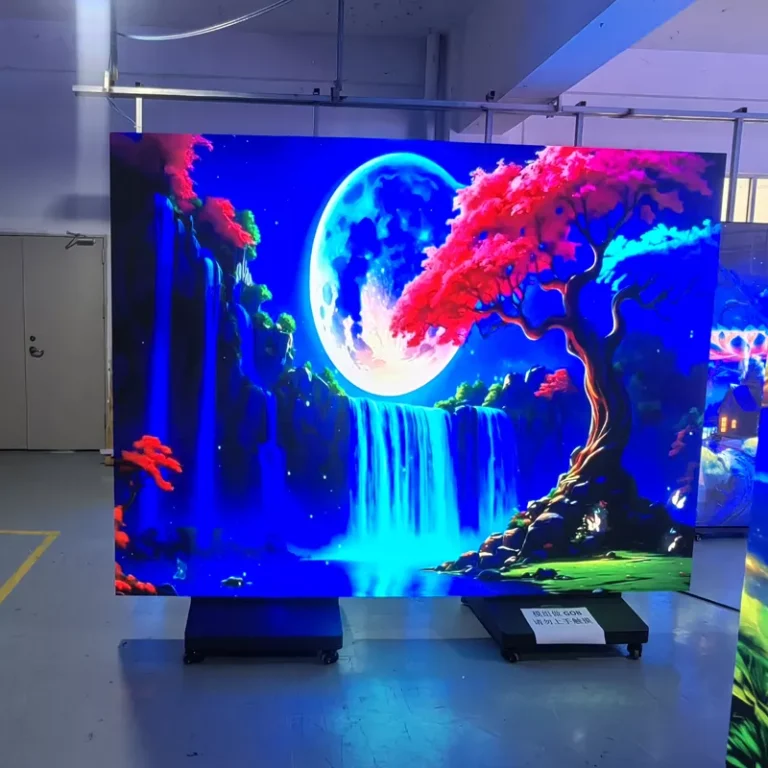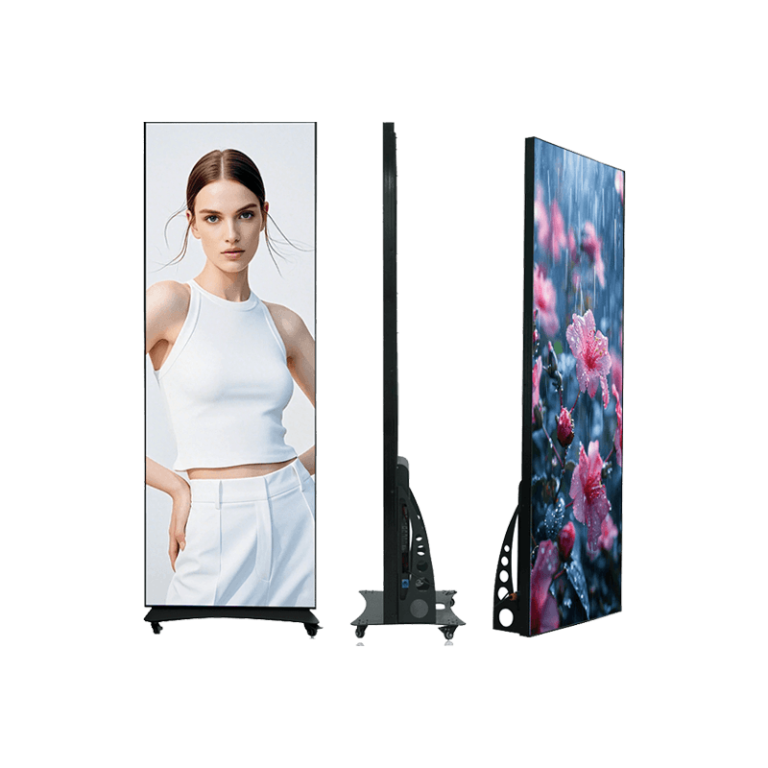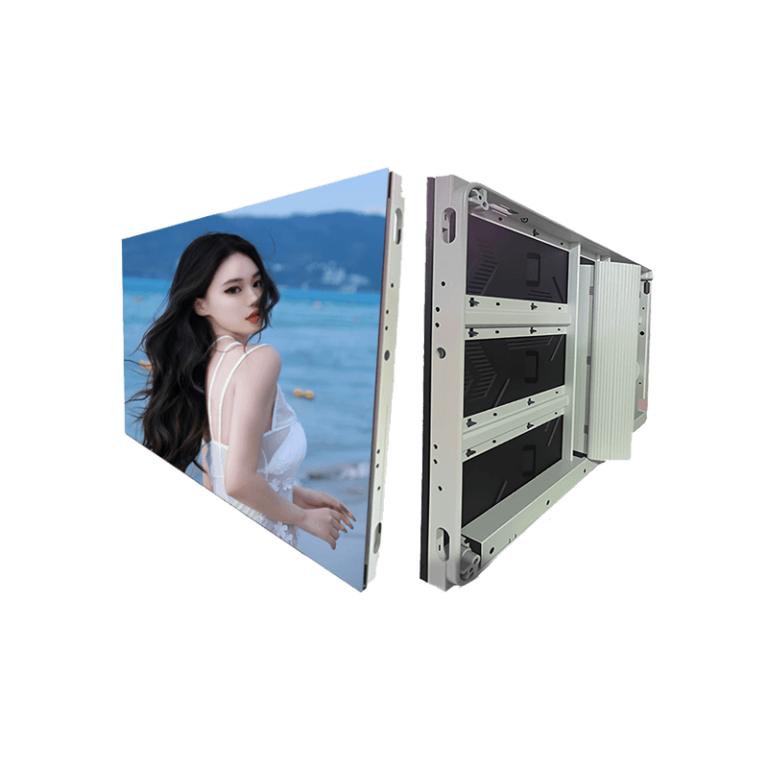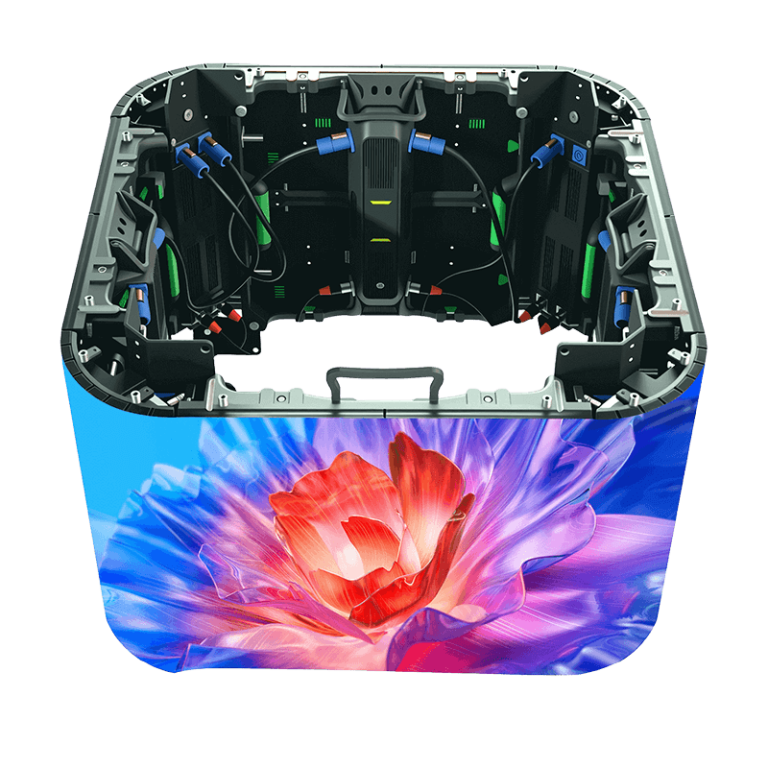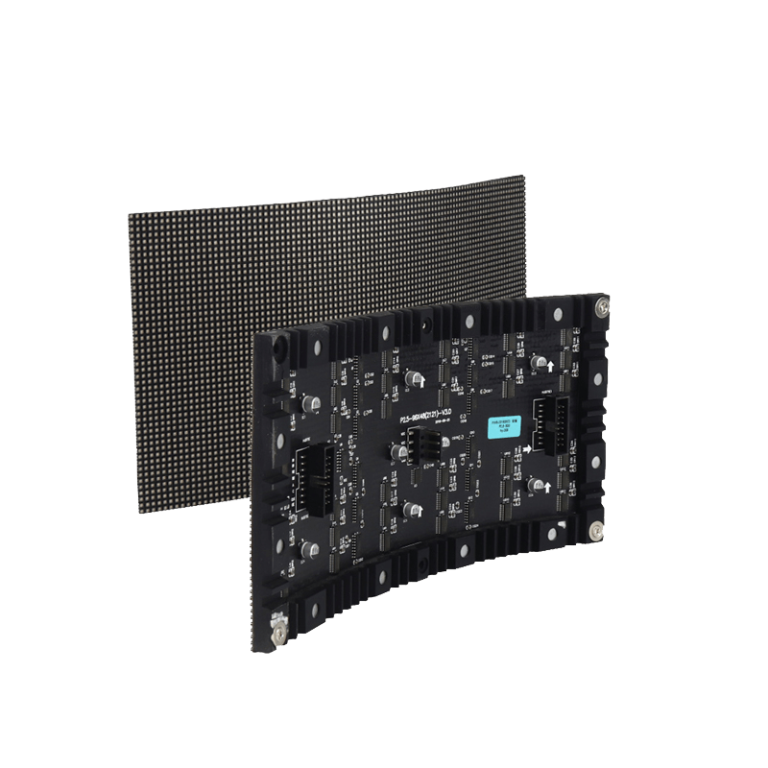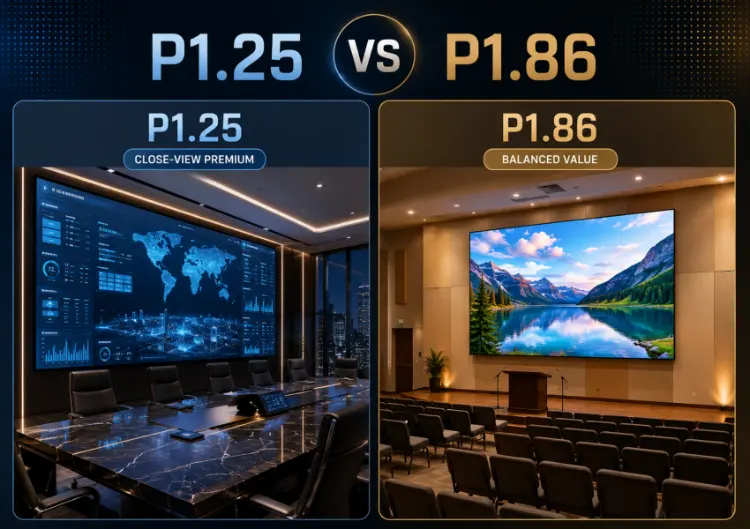
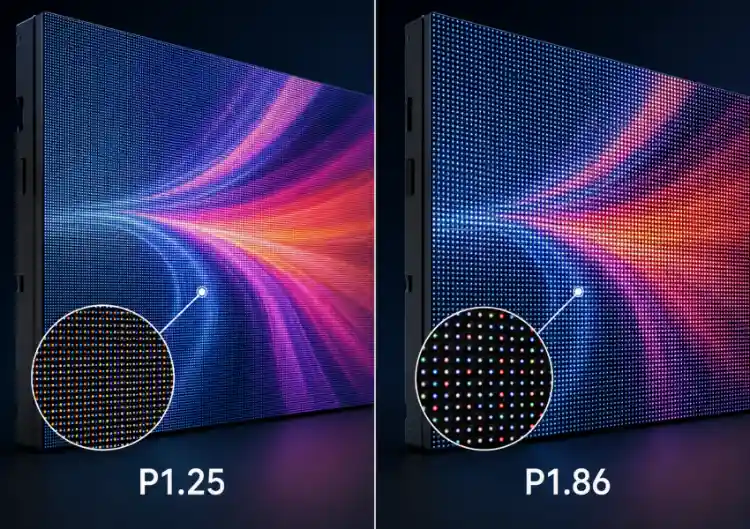
P1.25 and P1.86 sit close together in a product catalogue, but they solve slightly different room problems. A P1.25 LED display places pixels more tightly, which can help when viewers sit near the wall, when a presentation contains small text, or when a camera sees the screen as part of the shot. P1.86 gives up some density and can still look very refined, often with a more forgiving budget and less demand for extreme detail.
The practical question is not which number is smaller. It is whether the extra pixel density changes the finished experience enough to justify its cost, power design, processing requirements, and installation conditions. A useful P1.25 vs P1.86 decision starts with audience distance and content, then checks the room, screen size, and future use.
What the Pitch Difference Changes
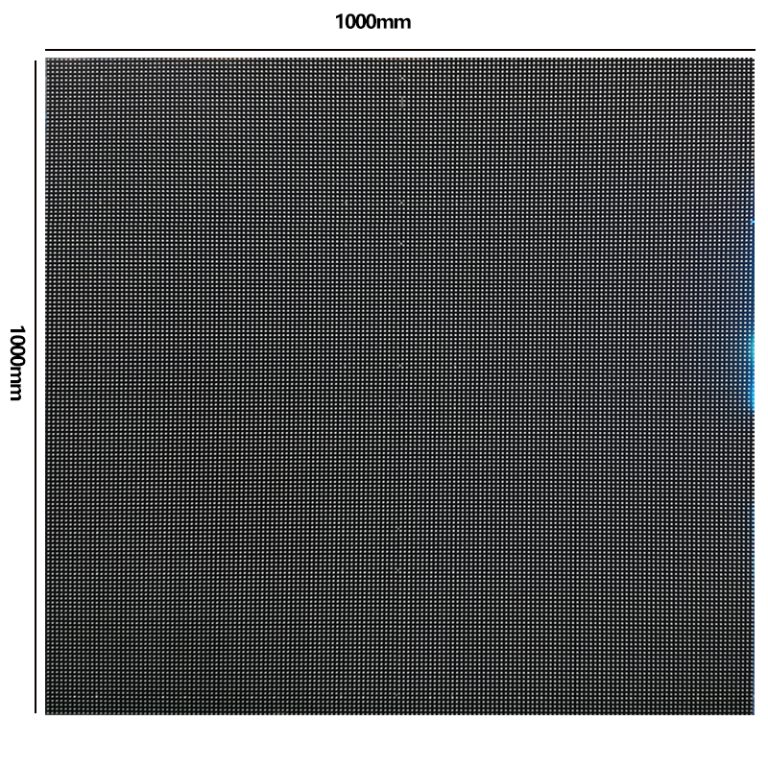
Pixel pitch is the centre-to-centre distance between adjacent LED pixels. At the same physical screen size, the smaller pitch creates more pixels per square metre. One indoor product configuration lists P1.25 at 640,000 dots per square metre, while a P1.86 configuration is listed at 284,444 dots per square metre. Those figures explain why P1.25 can render finer edges and smaller type, but they do not guarantee a better image if the source content, processing, or installation is weak.
P1.25 earns its premium when the extra detail is visible from the nearest seat or camera position. Think of a boardroom where participants read dense dashboards, a control room where small labels remain on screen, a premium showroom where product texture matters, or a studio where the wall sits inside a close frame. For large headlines, speaker backdrops, and viewers farther away, P1.86 may already provide enough detail.
Use the Nearest Viewer as the First Filter
Measure the closest normal viewing position, not the back wall. Include the presenter, front table, camera tripod, and anyone who may walk toward the screen. An approximate optimal range of 1.2-15 m for P1.25 and 1.8-20 m for P1.86. These are product-family references, not a substitute for a site test, but they show the direction of the choice: P1.25 supports closer inspection, while P1.86 may cover a broader room with less density.
Content Detail Can Justify the Smaller Pitch
An indoor LED wall used for presentation slides does not have one fixed workload. A sales keynote with bold type is easier to serve than a CAD view, medical image, financial dashboard, product close-up, or multi-window video conference. Count the smallest important text and identify whether it must remain legible from the front row. If the content team can redesign slides with larger type, P1.86 may meet the need. If the content is fixed by an application, higher density may be the cleaner route.
The source resolution still matters. A P1.25 wall cannot create detail missing from a low-resolution feed. Scaling a small image across a large canvas can look soft even with a dense pixel grid. Check the processor, input resolution, aspect ratio, window layouts, and the distance from the content source. The best small pixel pitch LED is the one that receives content at a suitable resolution and displays it consistently.
Budget, Power, and Installation Boundaries
The cost difference is not limited to the LED modules. More pixels can affect cabinet count, processing capacity, data paths, calibration time, spare stock, power distribution, and the level of visual inspection required. Exact price varies with cabinet format, quantity, service method, control system, and customization, so a fixed P1.25 premium should not be invented before a quotation is built.
Power planning also belongs in the comparison. One P1.25 indoor die-cast configuration lists average power around 350 W/m² and maximum power up to 1,200 W/m², while a listed P1.86 configuration shows around 400 W/m² average and up to 800 W/m² maximum. Ask for the exact cabinet’s average and peak values, circuit load, heat path, and brightness setting.
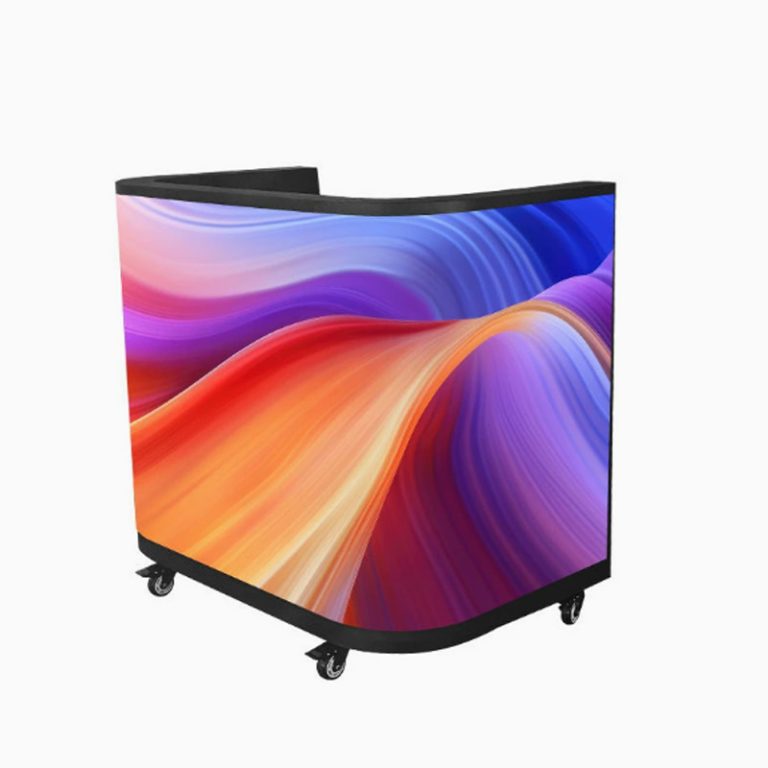
Installation access can decide the answer. A fine-pitch LED screen with front service may fit a shallow wall where rear access is blocked. A fixed indoor LED wall may need a steel frame, ventilation space, cable route, and a maintenance plan. A three-fold P1.86 display is a different deployment model from a permanently mounted wall, so product form and pitch should be discussed together.
Camera Use and Room Comfort
When an LED wall appears in a livestream or recorded meeting, refresh rate, scan mode, grayscale, colour calibration, and camera settings become part of the purchase brief. Listed P1.25 and P1.86 configurations include 3,840-7,680 Hz refresh options and 16,384 grayscale levels, but the exact setting must be confirmed on the quoted build. A camera test should cover the actual lens, frame rate, shutter range, brightness, and content.
For people in the room, excessive brightness can be more distracting than helpful. A fine-pitch indoor display should be adjustable to the space and tested at working levels. Ask for a sample with low-brightness gradients, skin tones, grey text, and moving content. An indoor LED display range may be a sensible choice when the room needs detail without pushing to the smallest available pitch; a control room display application may justify P1.25 when fine information stays on screen all day.
A Buyer’s Decision Rule
P1.25 makes more sense when at least one of these conditions is real: the nearest viewer is close, the content contains small fixed detail, the camera frames the wall from a short distance, or the visual standard leaves little room for pixel structure. P1.86 makes more sense when the room is deeper, content is bold, the wall is seen mainly from mid-range, or the project needs a stronger cost balance.
Before approval, compare the same screen size in both pitches. Review a real slide deck, fine graphics, dark scenes, moving video, and a camera clip. เลียลเลด can provide a starting point for product-family discussion, but the final choice should be tied to the room drawing, source resolution, brightness target, service access, and confirmed quotation.
คำถามที่พบบ่อย
Q1: Is P1.25 always sharper than P1.86?
A1: It has a tighter pixel pitch and can show finer detail at the same size, but sharpness also depends on source resolution, processing, calibration, cabinet flatness, and viewing distance.
Q2: When is P1.86 the better purchase?
A2: P1.86 can be the better fit when viewers are farther away, content uses larger elements, and the project values a balanced budget and simpler specification.
Q3: Should P1.25 be selected for every conference room?
A3: No. Measure the nearest seat, content detail, camera position, screen size, brightness, and service access. A room that does not use the extra density may not gain enough value from it.