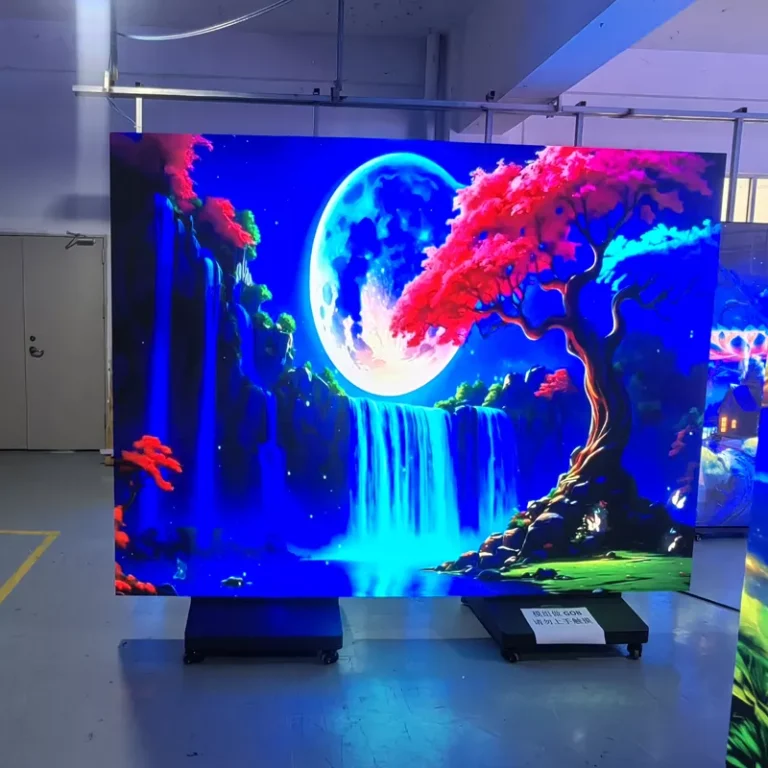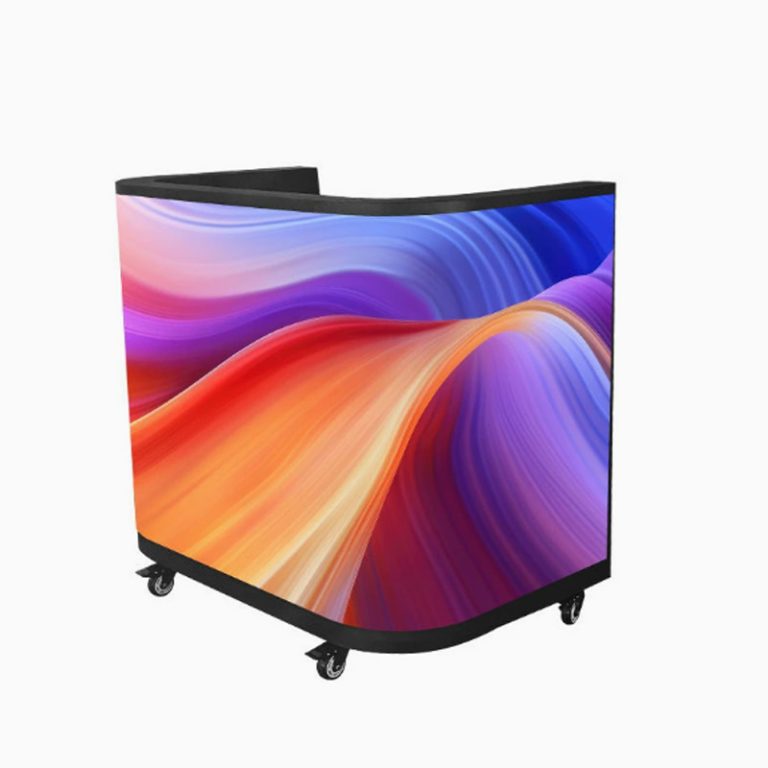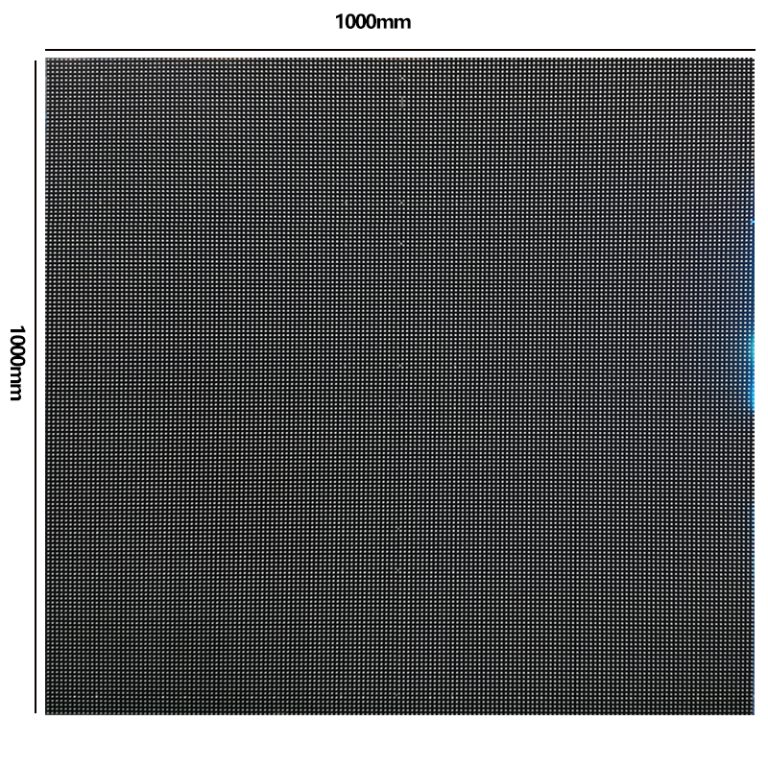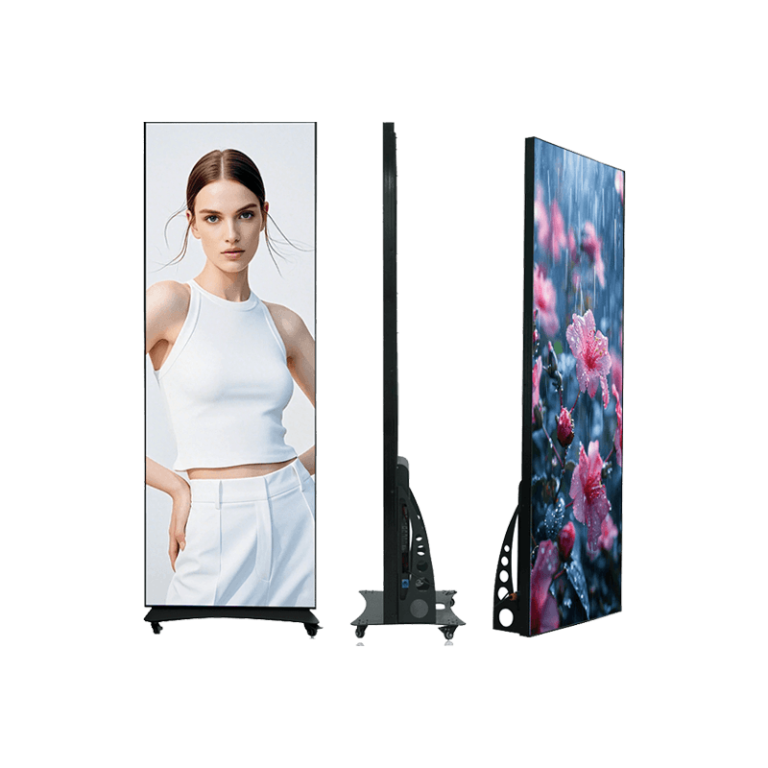
El crecimiento de los módulos LED ha cambiado el sector de la comunicación visual, que ha pasado de luces indicadoras básicas a configuraciones de pantalla digital complejas. Al emplear tecnología de escaneo dinámico, la imagen permanece estable, que carece de ruido, parece nítida y muestra efectos de animación variados y vivos. La reproducción de vídeo fluye uniformemente. Las pantallas LED pueden mostrar números cambiantes, texto e imágenes gráficas; pueden usarse no solo en interiores sino también al aire libre y tienen ventajas que los proyectores, las paredes de vídeo y las pantallas LCD no pueden igualar.
Diseño Estructural e Ingeniería de Módulos LED Modernos
Antes de explorar tipos específicos de módulos, es vital entender cómo el diseño estructural determina la estabilidad de rendimiento y la calidad de imagen en varios entornos.
Componentes principales de un módulo LED
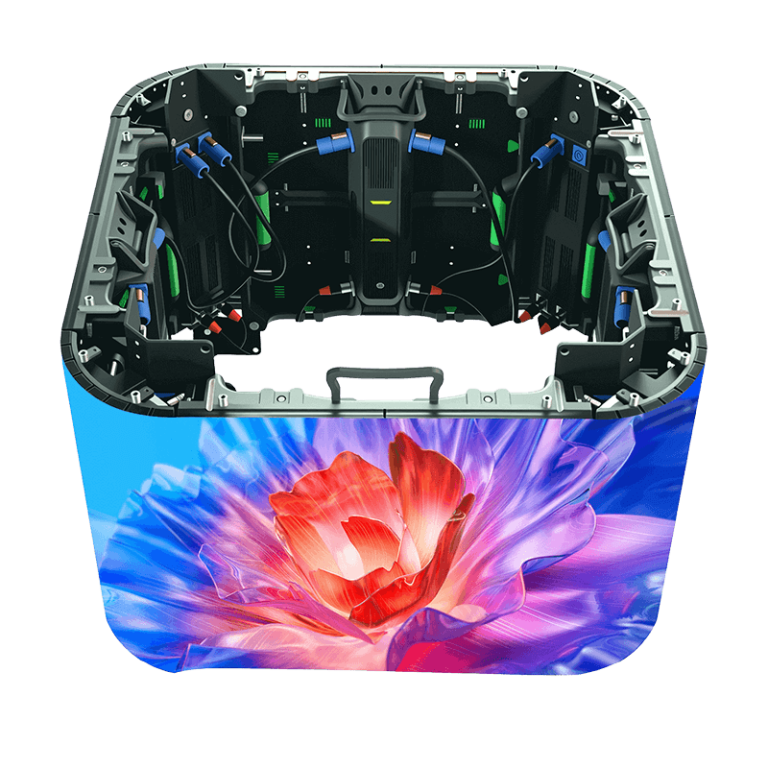
Un módulo LED consiste principalmente en LEDs, circuitos integrados de controlador, PCBs, materiales de carcasa y lentes ópticas. Los sistemas de gestión térmica garantizan un funcionamiento constante bajo uso intenso. La liberación efectiva de calor a través de carcasas de aluminio o compuestos evita el sobrecalentamiento en operaciones en curso. Las capas de protección aumentan la resistencia al contacto con el agua o el polvo, lo que es vital para usos al aire libre.
Nuestro enfoque de ingeniería integra la instalación de módulos magnéticos con acceso de mantenimiento delantero o trasero para facilitar el servicio. La instalación del módulo magnético soporta el mantenimiento delantero y trasero. Este diseño mecánico de precisión asegura una alineación perfecta entre los gabinetes mientras mantiene un sellado hermético para una fiabilidad a largo plazo.
Pitch de píxeles y optimización de resolución
El paso de píxel, definido como la brecha entre los LED vecinos, influye directamente en la resolución y el rango de visión apropiado. Los pasos de píxel más estrechos dan una resolución más nítida, lo que se adapta a aplicaciones interiores de corta distancia. Sin embargo, normalmente requieren mayor potencia debido a una mayor concentración de diodos. Los ingenieros necesitan sopesar el paso de píxel contra la salida de luz y la eficacia de la regulación del calor para mantener el rendimiento máximo a largo plazo. Los sofisticados métodos de ajuste corrigen automáticamente la uniformidad de la luz sobre los módulos. En consecuencia, evitan líneas o variaciones de color notables en disposiciones de múltiples paneles.
Tipos de módulos LED utilizados en sistemas de visualización modernos
A medida que los entornos de aplicación se diversifican, desde auditorios interiores hasta publicidad al aire libre, los tipos de módulos LED han evolucionado en consecuencia con diseños estructurales especializados.
Módulos led interiores
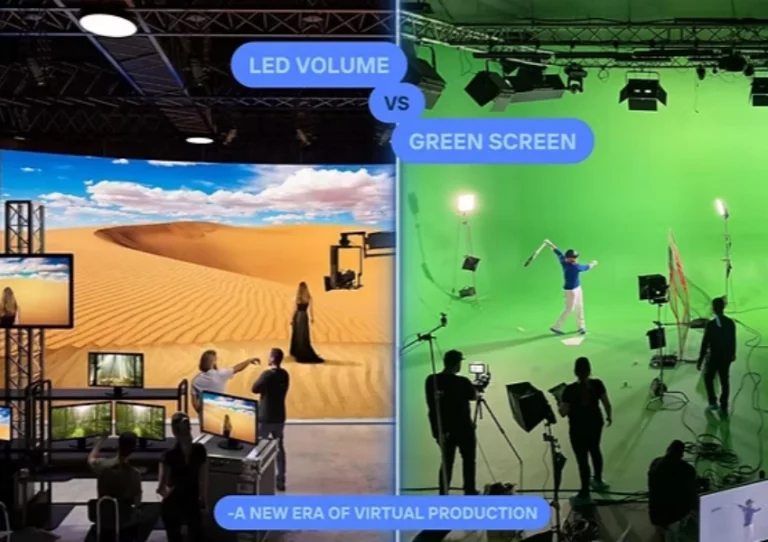
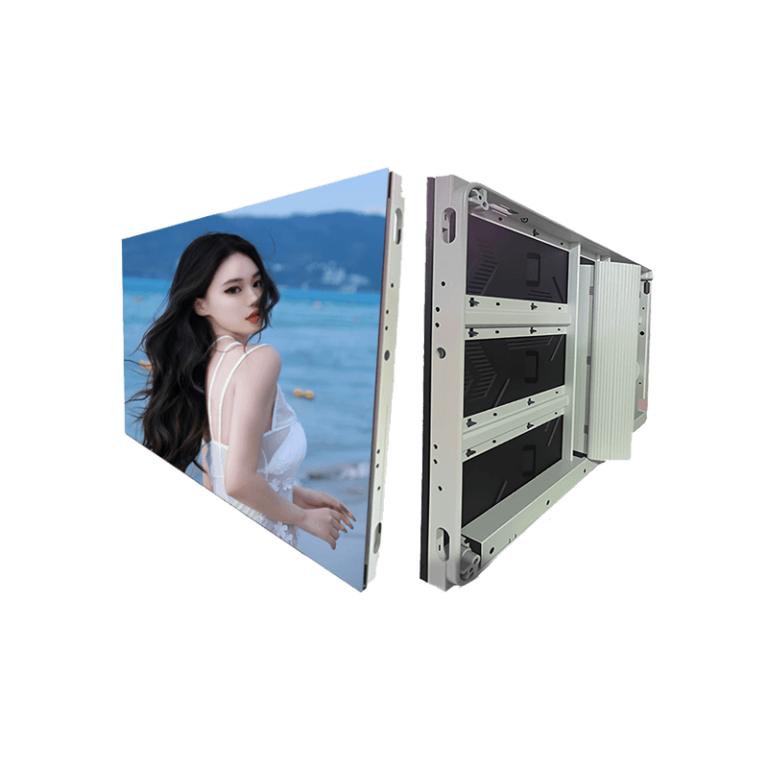
Los módulos interiores enfatizan el estrecho paso de píxeles para imágenes detalladas en cortos intervalos de visión. El Caja de pantalla interior P4.81 ilustra este concepto a través de su paso de píxeles de 4,81 mm. Produce visuales fluidas con un ángulo de visión amplio de 160° y un brillo constante cerca de 1000 cd/m², adecuado para salas de reuniones o estudios. Cuenta con píxeles densos, colores vivos y una velocidad de actualización rápida, lo que garantiza imágenes en movimiento fluidas. Su armario ligero de aluminio fundido a presión permite una unión rápida mientras mantiene la firmeza estructural, un rasgo crucial para configuraciones regulares en espacios de eventos.
Mediante el uso de una forma modular, la pantalla se ensambla a partir de varios módulos de unidad, haciendo la instalación sencilla. Cuando se combinan con las características de baja energía típicas de los LEDs interiores, estas configuraciones alcanzan una vida útil prolongada que supera las 100.000 horas en condiciones gestionadas.
Módulos LED al aire libre
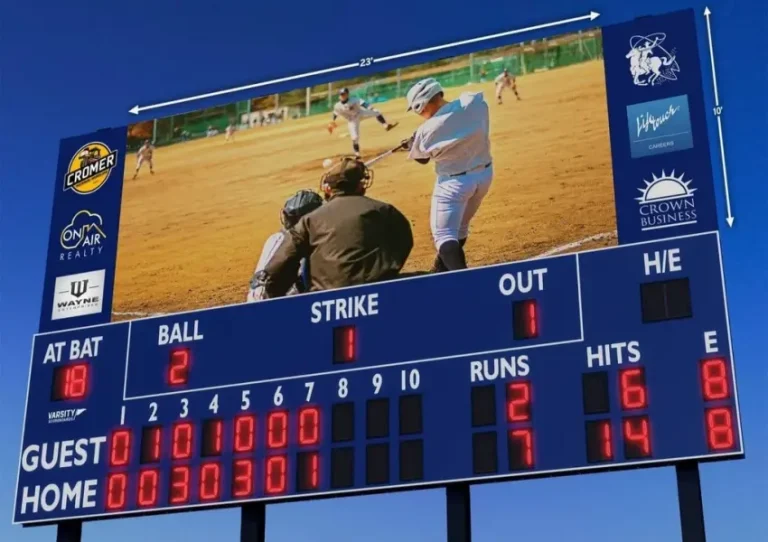
Los módulos al aire libre deben soportar condiciones climáticas duras mientras mantienen un alto brillo y visibilidad bajo la luz solar. El al aire libre llevó cartel P6 demuestra una ingeniería robusta a través de su armario de hierro impermeable con clasificación IP65 construido en acero laminado en frío con recubrimiento anti-UV, lo que garantiza la resistencia a la corrosión incluso bajo exposición prolongada a la lluvia o el calor. Maneja el viento, la lluvia y la arena como un profesional. Cada parte, desde las costuras del gabinete hasta las conexiones de alambre, está sellada firmemente. Su 6 El paso de píxel de mm equilibra la claridad con la durabilidad, lo que lo hace ideal para carteles publicitarios o pantallas de información pública que operan continuamente al aire libre.
Del mismo modo, el Aluminio fundido a presión P6 modelo combina marcos ligeros mecanizados por CNC con ≥ 5500 Salida de brillo cd/m², garantizando una visibilidad clara incluso en la luz solar directa. Espacio de empalme ultrapreciso (tan bajo como 0,1) mm) elimina las interrupciones de imagen, proporcionando una experiencia visual suave en pantalla completa.
Módulos LED flexibles y transparentes
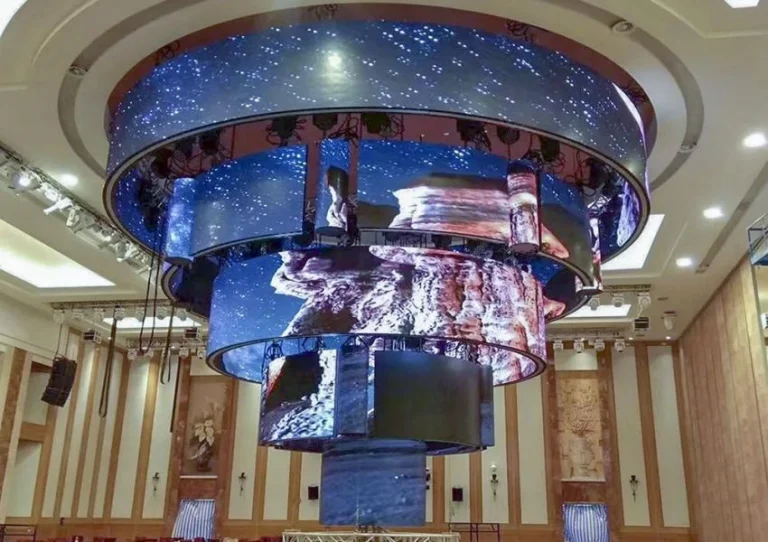
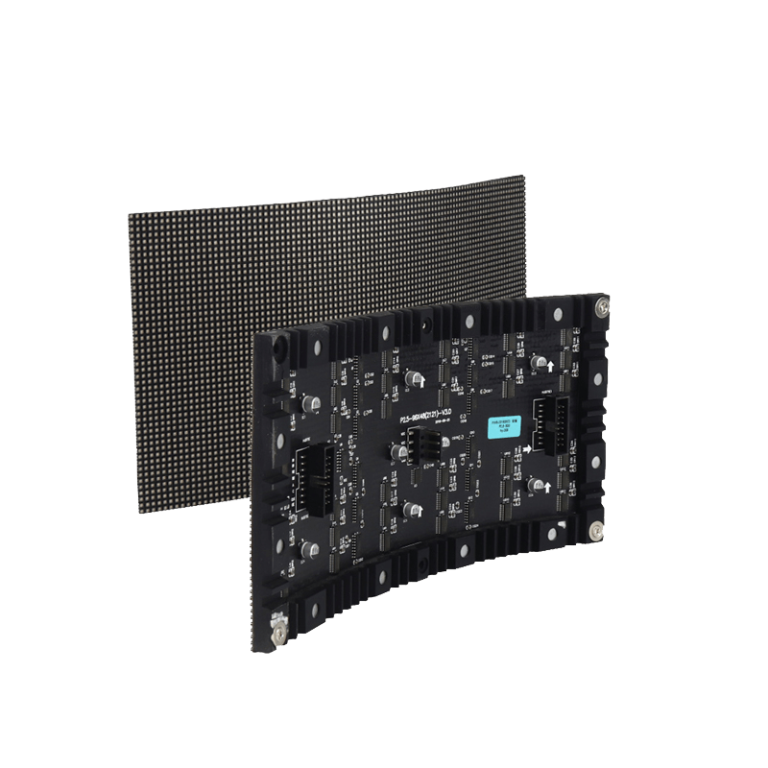
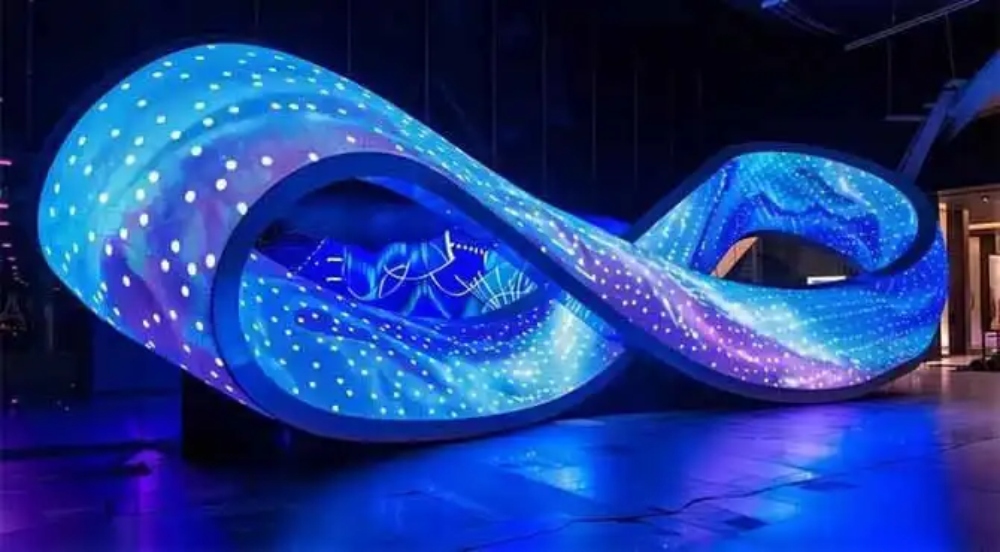
Las pantallas flexibles emergentes emplean sustratos doblables, lo que permite la instalación en superficies curvas o estructuras cilíndricas sin distorsión. Pantallas flexibles LED puede doblarse y plegarse en grandes ángulos, soportando soluciones de empalme creativas como el arco interno, el arco externo y las formas de onda del cilindro. Las variantes transparentes integran matrices microLED dentro de paneles de vidrio, lo que permite a los arquitectos fusionar el contenido digital sin problemas en las fachadas del edificio mientras mantienen la transparencia.
Estas innovaciones amplían las posibilidades creativas en vitrinas minoristas o salas de exposiciones donde la integración estética importa tanto como la funcionalidad.
Sistemas de control avanzados para pantallas LED
Para lograr una sincronización precisa a través de múltiples módulos, las arquitecturas de control avanzadas son componentes esenciales dentro de los ecosistemas de pantalla modernos.
Tecnologías de procesamiento de señales y control de imágenes
Los controladores basados en FPGA procesan enormes cantidades de datos visuales a alta velocidad, lo que garantiza la sincronización en tiempo real entre los gabinetes conectados. A través de programas de control especializados, muestra múltiples tipos de información simultáneamente, incluyendo gráficos, imágenes y manejo de datos, mientras respalda usos completos como la gestión de fuentes de señal directa, cambios cronometrados, tareas de varios usuarios y supervisión central unificada. Los métodos de rango dinámico alto (HDR) mejoran los niveles de contraste, generando negros más ricos y resaltes más fuertes esenciales para imágenes a nivel de televisión.
Este procesamiento de precisión es particularmente valioso cuando se gestionan configuraciones híbridas que combinan paneles de tono fino en interiores con unidades de alto brillo en exteriores, cada una de las cuales requiere parámetros de corrección gamma distintos pero una salida de color unificada.
Soluciones de monitoreo y mantenimiento inteligentes
Los sensores integrados rastrean continuamente la temperatura, la tensión y el flujo de corriente, lo que garantiza un funcionamiento seguro a lo largo de tiempos de ejecución extendidos. Los sensores integrados rastrean las métricas de temperatura, voltaje y rendimiento, mientras que el diagnóstico remoto permite el mantenimiento predictivo, minimizando el tiempo de inactividad. Las plataformas de gestión basadas en la nube ahora permiten la supervisión centralizada de instalaciones dispersas geográficamente, simplificando los flujos de trabajo de resolución de problemas a través de análisis predictivos.
Innovaciones que impulsan el futuro de los sistemas de módulos LED
El progreso tecnológico continúa remodelando la forma en que diseñamos diodos emisores de luz hacia una mayor miniaturización e integración de inteligencia.
Avances de MicroLED y MiniLED
La tecnología MicroLED representa un gran salto adelante, ofreciendo una mayor eficiencia luminosa por vatio en comparación con los paquetes SMD tradicionales al tiempo que elimina la dependencia de la retroiluminación. Los microLEDs proporcionan una eficiencia de brillo superior con un uso de energía reducido, mientras que las técnicas de fabricación de precisión reducen los defectos de píxeles a escalas microscópicas. Mientras tanto, la retroiluminación MiniLED mejora las relaciones de contraste dentro de los sistemas híbridos LCD-LED, colmando las brechas de costo-rendimiento antes de que la adopción completa de microLED se convierta en la corriente principal.
Integración con IoT y tecnologías de IA
La inteligencia artificial gobierna cada vez más la calibración automática, ajustando el brillo y el equilibrio de color en función de las condiciones de iluminación ambiental, reduciendo la intervención manual. La calibración impulsada por IA automatiza los ajustes de brillo basados en las condiciones ambientales, mientras que la conectividad IoT facilita el monitoreo remoto a través de redes globales. Los datos recopilados a través de marcos IoT permiten estrategias de optimización energética, alineando las operaciones de visualización con los objetivos de sostenibilidad exigidos por las ciudades inteligentes en todo el mundo.
Aplicaciones en todas las industrias utilizando pantallas LED modernas
La versatilidad de la arquitectura modular permite el despliegue en diversos sectores, desde redes comerciales de publicidad hasta centros de mando de misión crítica.
Publicidad comercial y señalización digital
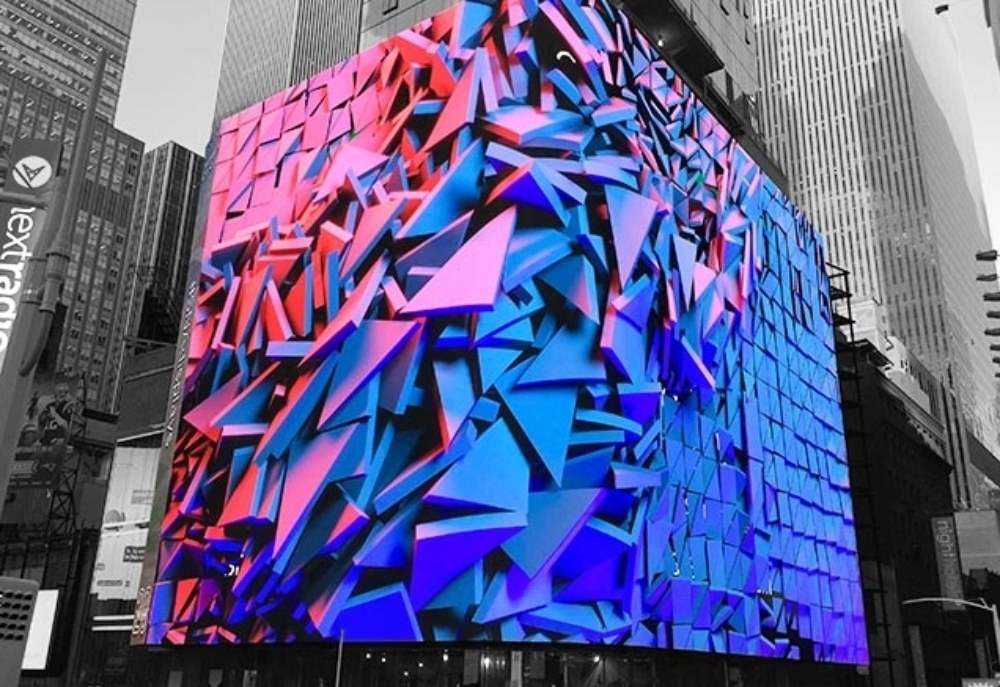
La señalización digital dinámica impulsada por LEDs modulares ofrece imágenes vívidas que captan la atención del consumidor de manera mucho más eficaz que los carteles estáticos. Las instalaciones fijas al aire libre ofrecen imágenes claras y llamativas que elevan la presencia digital de un edificio, reforzando el impacto de la marca. La programación de contenido en tiempo real sincronizada a través de servidores en la nube permite a los vendedores adaptar las campañas al instante de acuerdo con análisis demográficos o promociones sensibles al tiempo.
Lugares de entretenimiento y producción de eventos
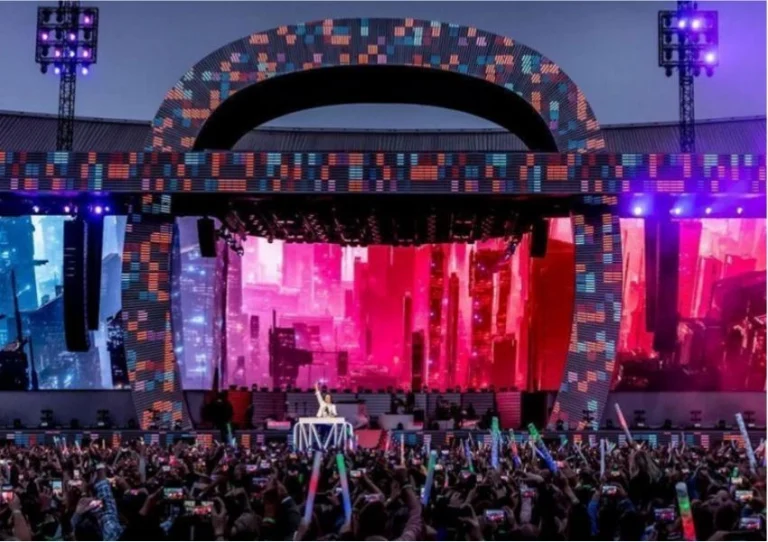
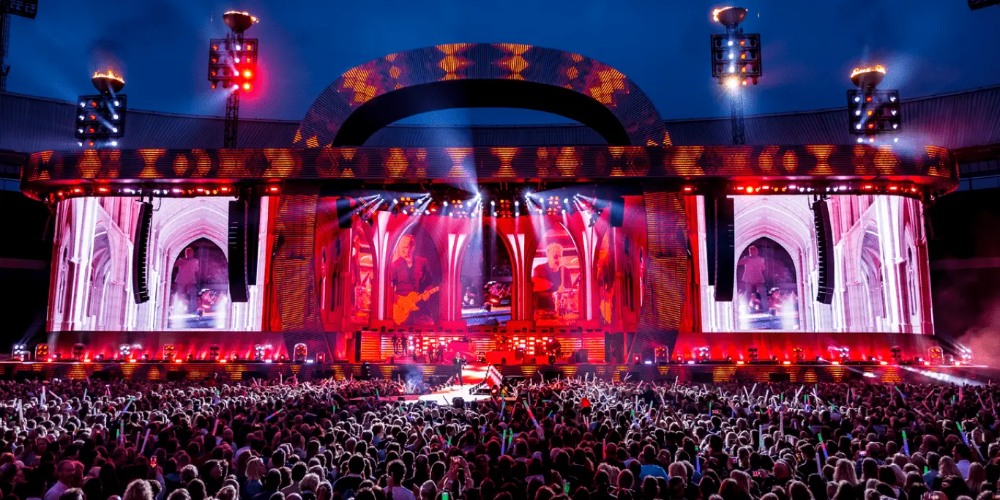
Conciertos a gran escala, arenas deportivas o festivales dependen en gran medida de configuraciones modulares como nuestros paneles interiores de la serie P3, que proporcionan una capacidad de empalme sin costuras esencial para escenarios inmersivos sin costuras visibles entre armarios. La pantalla de pantalla LED, diseñada con un gabinete de aluminio fundido a presión personalizado, prioriza la ligereza, la delgada y la instalación rápida, lo que la convierte en adecuada para grandes áreas que emplean un sistema de control sincrónico que acepta varias señales de entrada de vídeo, incluyendo DVI, VGA, HDMI, IS-video y YUV compuesto, lo que permite la reproducción en tiempo real de vídeos e imágenes de texto, una difusión clara, colores realistas y una fuerte adaptabilidad.
Sistemas de Comunicación Industrial y Corporativa
En los centros de mando industriales, las paredes de vídeo de alta resolución agregan métricas operacionales en directo en paneles cohesivos, facilitando la toma de decisiones rápida. El sistema de pantalla grande LED integra múltiples tecnologías centrales, incluyendo pantalla digital de alta definición, procesamiento multipantalla de empalme sin problemas, conmutación de señal y comunicación de red, creando una plataforma profesional y visualización de información centralizada intuitiva en tiempo real; Mejorar la visualización a través de una gestión inteligente; Ayudar a los centros de despacho a captar la información clave de manera eficiente, especialmente durante emergencias, y mejorar significativamente la eficiencia de la respuesta.
Presentación Leyaled
En medio de este progreso surge Leyaled- un productor cualificado centrado en respuestas de pantalla led combinadas con sede en Shenzhen, China, con más de doce años de trabajo en I+amp; D, fabricación y difusión mundial. FWS Technology Co., Ltd. es una empresa de tecnología avanzada centrada en el área de pantalla LED combinada, incluyendo R & amp; D, fabricación y ventas, equipado con ocho líneas automáticas SMT de vanguardia aprobadas por ISO9001: 2008, CCC, normas CE, ayudadas por un grupo técnico cualificado que representa el 10% del personal, junto con una unidad de ventas fuerte que construye una base firme, suministra asistencia al cliente superior y sigue la creencia de que "la calidad es la base de la supervivencia, la integridad una piedra angular, la innovación". página de contacto.
Preguntas frecuentes
Q1: ¿Qué factores determinan si se debe seleccionar un módulo led interior o exterior?
A1: La selección depende principalmente de la exposición ambiental, los requisitos de brillo, la distancia de visión y la accesibilidad al mantenimiento; Los modelos exteriores incorporan carcasas impermeables como armarios con clasificación IP65, mientras que las unidades interiores se enfocan en un paso de píxel más fino, lo que ofrece una mayor resolución a distancias más cortas.
Q2: ¿Cómo afecta el tono de píxel al rendimiento general de la pantalla LED?
A2: Los pasos de píxel más pequeños aumentan la resolución adecuada para aplicaciones de visión cercana pero aumentan el consumo de energía; Los tonos más grandes mejoran la eficiencia del brillo, ideal para instalaciones de visión amplia, equilibrando la visibilidad contra la rentabilidad.
Q3: ¿Son fiables los módulos LED flexibles en comparación con los rígidos?
A3: Sí, las pantallas flexibles modernas utilizan sustratos resistentes que soportan la flexión repetida sin degradar el rendimiento óptico; Los recubrimientos protectores combinados con un control preciso de corriente prolongan la vida útil comparable a los módulos rígidos estándar, garantizando una calidad de imagen consistente en todas las instalaciones creativas y curvas.