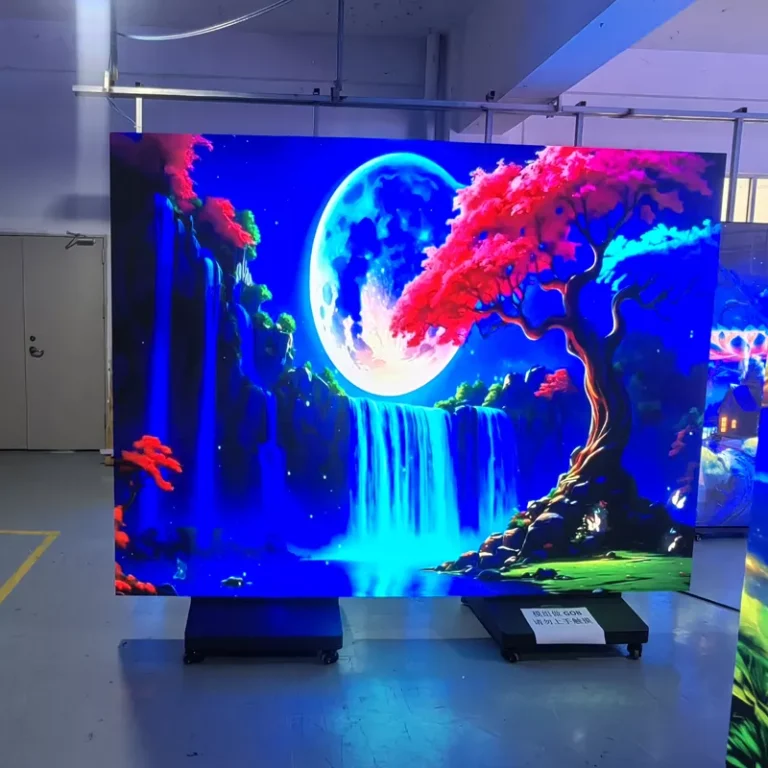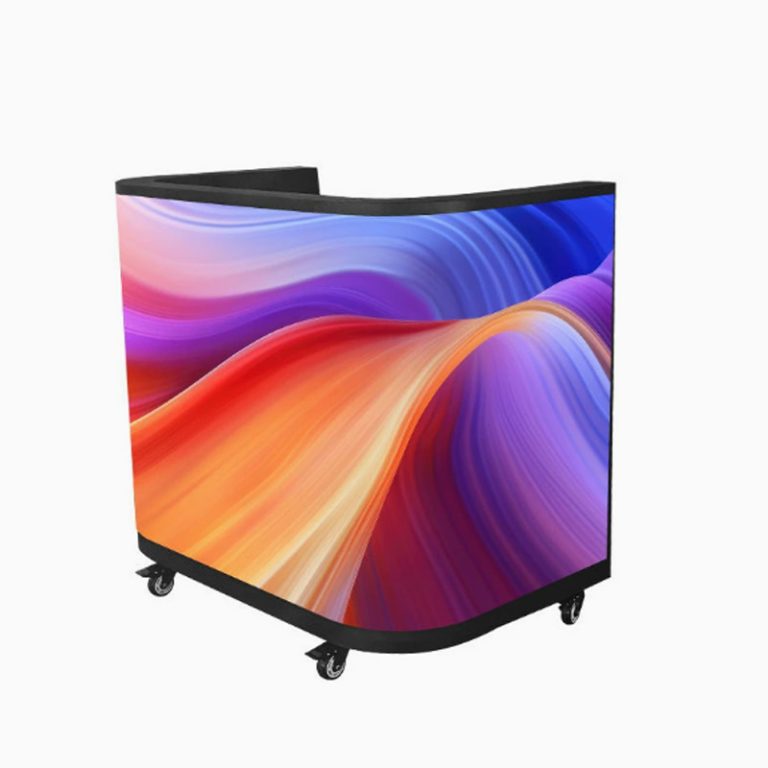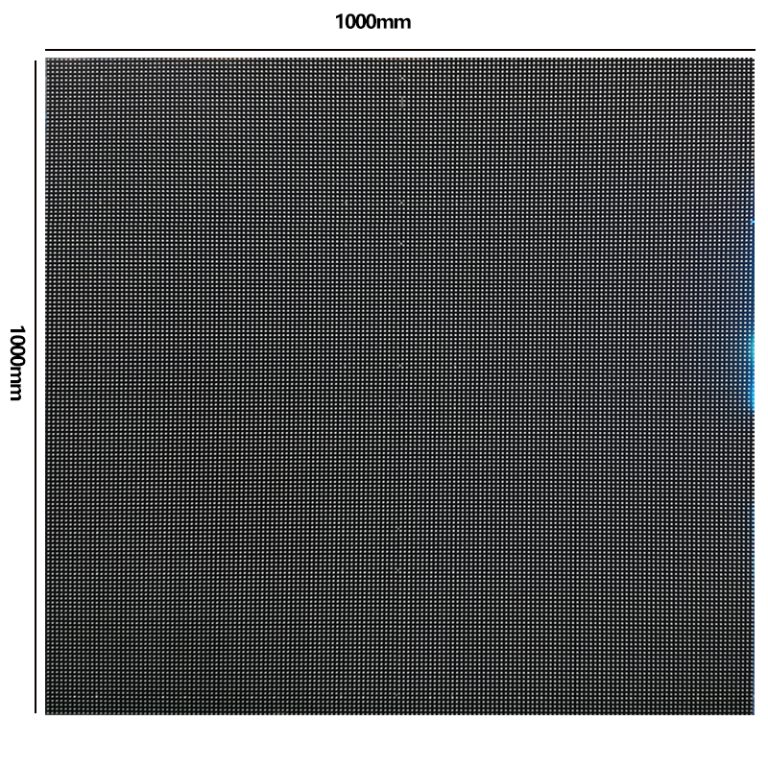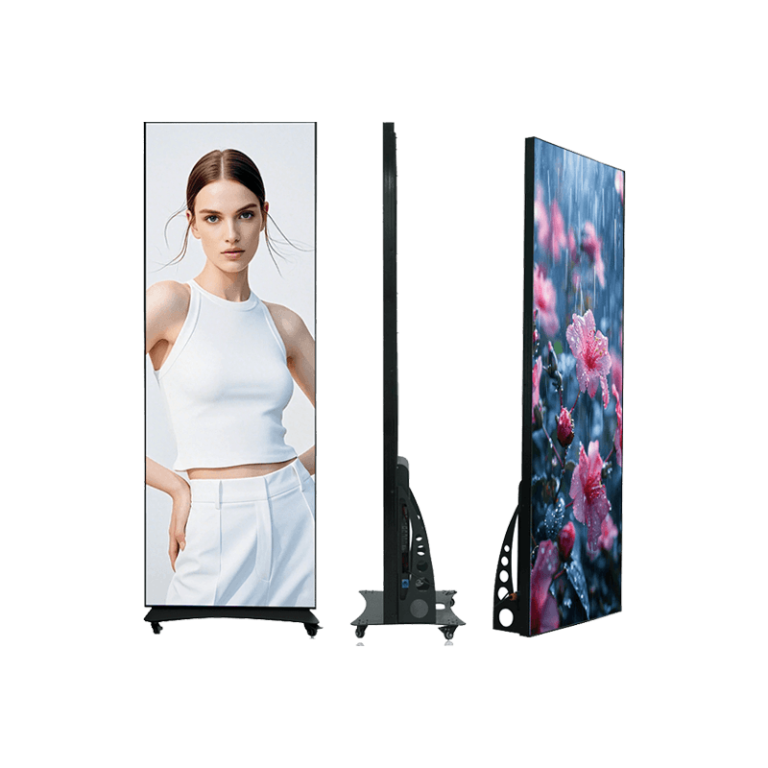
Close viewing changes the LED display decision. At a distance, a wall can look uniform even when the package structure, surface protection, and small differences between modules are hard to notice. Move the audience, camera, or presenter closer, and those details start to matter. Pixel density is still important, but so are impact resistance, repair method, grayscale, colour consistency, and how the display behaves at lower brightness.
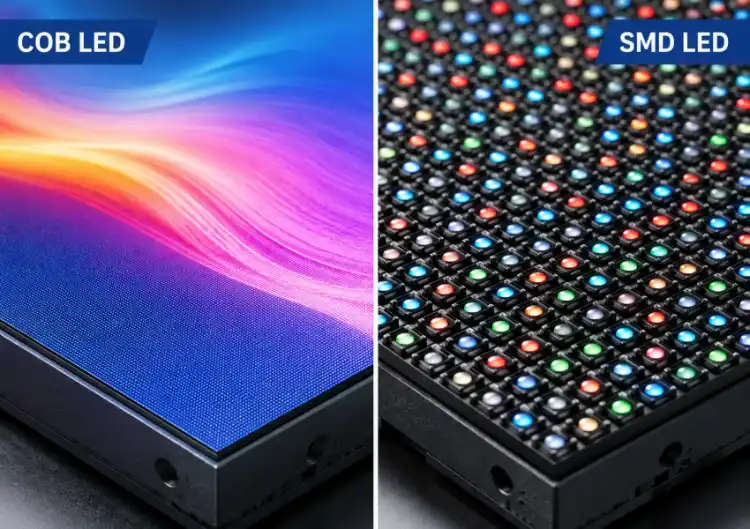
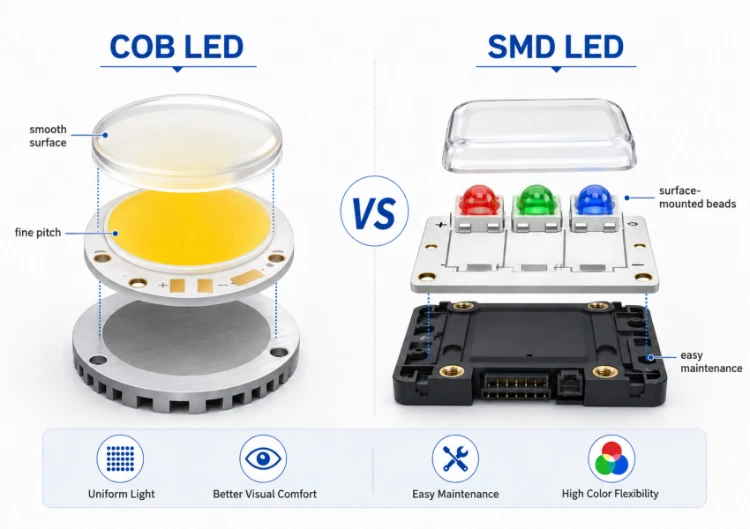
COB LED vs SMD LED is therefore not a simple contest with one winner. COB places the bare red, green, and blue chips directly on the board and forms an integrated protective surface. SMD mounts packaged LEDs onto the module. That established construction can offer a familiar service route and broad product choice. The right answer depends on the room, the content, the service team, and the cost of a visible defect.
How the Two Package Structures Differ
A COB LED screen combines chip attachment, electrical connection, heat path, and moulding into a more integrated module. LED industry describes direct chip packaging, full-board moulding, and a protective layer that can improve mechanical protection and reliability in small-pitch applications. This is attractive where viewers stand close, where the screen is touched occasionally, or where a tiny exposed package could become a visual nuisance.
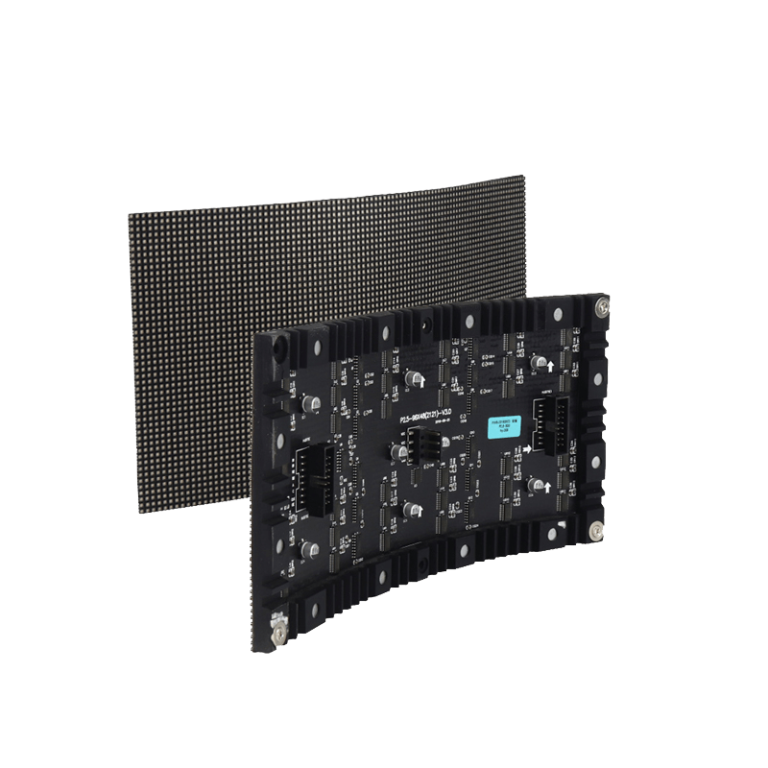
SMD uses individual three-in-one LED packages mounted on the board. That structure is widely understood by production and service teams, and individual parts or modules can be easier to identify during repair. It is not automatically fragile. A well-built SMD module, careful installation, and suitable surface protection can perform very well in conference rooms, showrooms, retail spaces, and studios.
Protection Helps, but It Does Not Remove Service Decisions
COB’s integrated surface can reduce the chance that a small contact damages a separate package, yet repair may require more specialized work or a complete module exchange. SMD service can be more familiar and may reduce the cost of replacing a small defective area, although the result depends on the supplier’s process, spare availability, and calibration after replacement. Ask how a failed pixel, damaged module, and colour mismatch are handled before comparing quotations.
Close Viewing Is About More Than Pixel Pitch
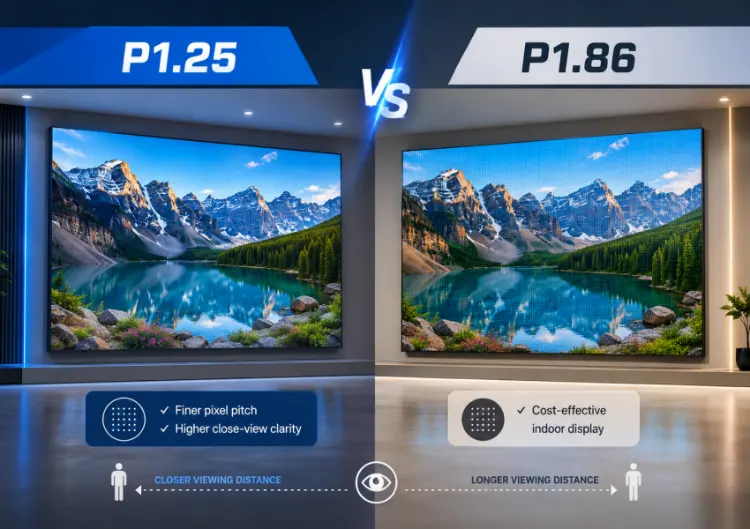
A fine pitch LED display puts more pixels into the same area, which helps text, product details, faces, and fine graphics look smoother at a shorter distance. The pixel pitch does not decide every part of image quality. Driver performance, grayscale, refresh rate, optical design, calibration, cabinet flatness, viewing angle, and the quality of the source content all contribute.
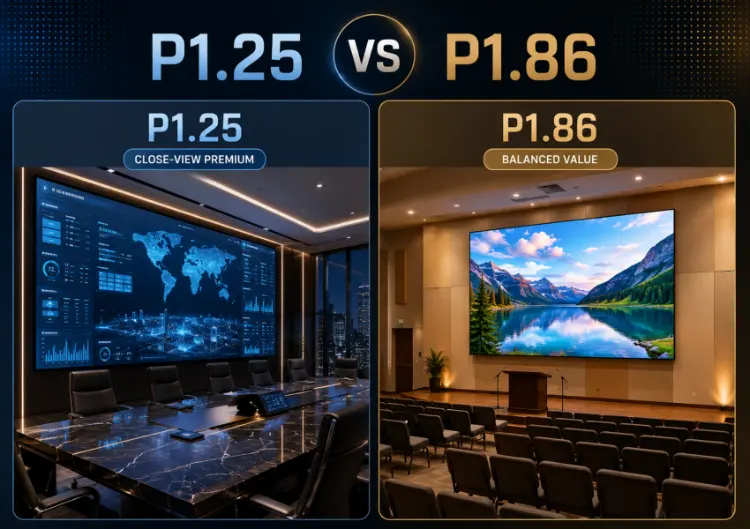
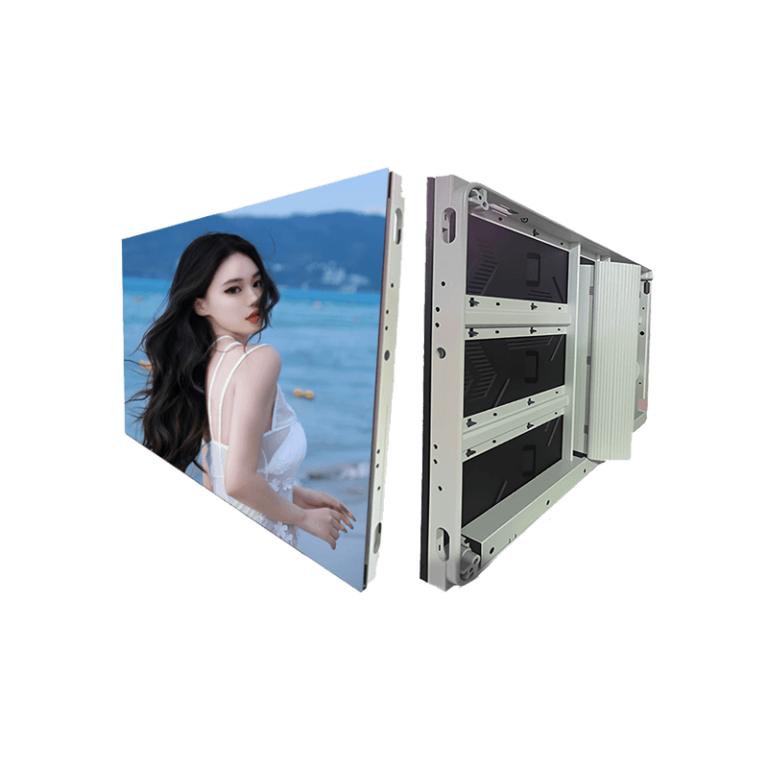
For a close indoor wall, a product-family specification may list 1.25 mm COB with 640,000 dots per square metre, 600-800 cd/m² white-balance brightness, 3,840-7,680 Hz refresh, and a 1.2-15 m optimal viewing range. These figures describe one configuration, not a universal promise. A different room, camera, content type, or brightness target can change the suitable choice. A ب2.604 indoor enclosure أو ب4.81 indoor enclosure may fit a different audience distance, so the quote should match the actual viewing zone rather than the smallest number available.
The same rule applies to SMD. Smaller pitch can reveal more detail, but it can also increase purchase cost and make a lower-quality installation easier to notice. If the nearest viewer is several metres away and the content is mostly large graphics, a slightly larger pitch may give a sensible balance. A retail wall near a product shelf, where people inspect text and packaging at short range, needs a different brief from a lobby wall viewed across a large floor.
Brightness, Colour, and Camera Conditions
Brightness should be high enough for the room and low enough to preserve comfortable viewing and product colour. A bright wall is not automatically a better wall. Low-brightness grayscale performance matters when a presenter stands near the screen, when dark product surfaces are filmed, or when the display is used in a controlled showroom. Ask for brightness adjustment, grayscale behaviour, colour calibration, and uniformity checks at the levels used in production.
Camera work adds another layer. Refresh rate and scan design affect how the display is captured, while shutter speed, frame rate, camera distance, and lens choice affect visible lines or flicker. A close viewing COB LED screen can look excellent to the eye and still need a camera test. Record a white field, dark gradient, moving graphic, skin tone, and fine text before approving the final configuration.
Cost and Maintenance Should Be Compared Together
COB can make sense when the project values a protected surface, dense pixels, and a premium close-view finish enough to accept a more specialized repair path. SMD can make more sense when the buyer prioritizes broad availability, straightforward module service, or a lower entry cost. Neither conclusion should be made from package type alone. The same pitch, cabinet, control system, and installation quality must be compared on both sides.
Request a sample that matches the proposed production batch. Check dead or dim pixels, low-brightness gradients, flatness, cabinet joins, viewing angles, and a short camera clip. Confirm the spare-module plan, calibration file, replacement method, and who pays for site work if a module arrives mismatched. An indoor fixed-installation route can help frame front-of-house conditions, but service access and spare policy still need to be written into the order.
Match the Technology to the Room and the Risk
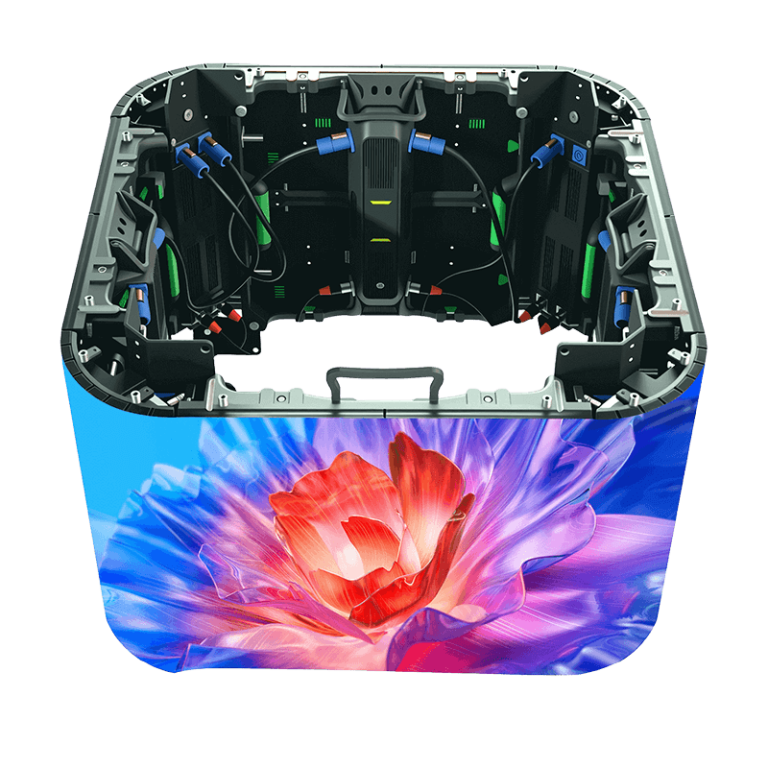
Leyaled has indoor fine-pitch formats, modular cabinet construction, studio and commercial display applications, and different product families for different viewing conditions. A supplier discussion should turn those options into a room-specific recommendation. لياليد can be used to review the wider category before the final product page is selected, while the buyer checks the exact package type and tested configuration.
Choose COB when close inspection, surface protection, and a refined small-pitch image justify the higher service barrier. Choose SMD when repair familiarity, part availability, or a more flexible budget carries greater weight. For both, insist on a live sample, real content, and the actual camera or audience distance. That is a more reliable answer to COB LED vs SMD LED than a blanket claim that either technology is always better.
أسئلة متكررة
Q1: Is COB always better for close viewing?
A1: No. COB can offer stronger surface protection and dense-pixel performance, but SMD may be easier to service and can suit many close indoor applications when the module and installation are well controlled.
Q2: Does COB provide higher brightness than SMD?
A2: Package type alone does not set brightness. Compare the actual module, optical design, driver, calibration, brightness range, and low-brightness grayscale at the intended viewing condition.
Q3: What should a buyer test before choosing a COB LED screen?
A3: Test real content, low and normal brightness, colour uniformity, cabinet flatness, viewing angles, touch resistance where relevant, and camera footage from the intended distance.