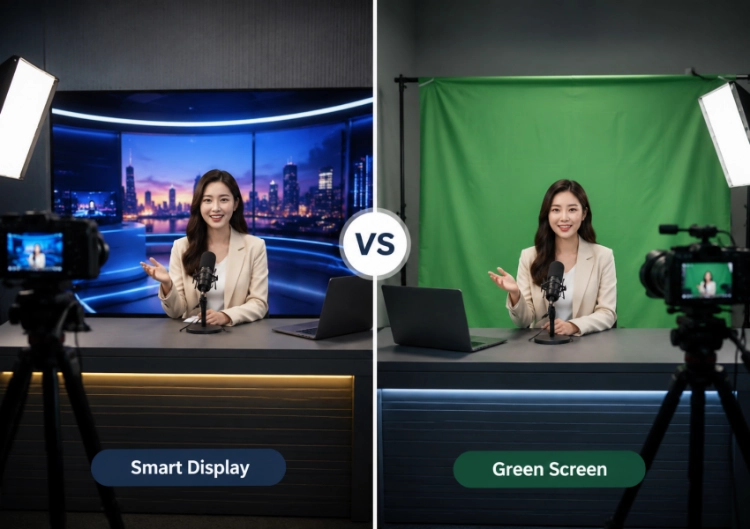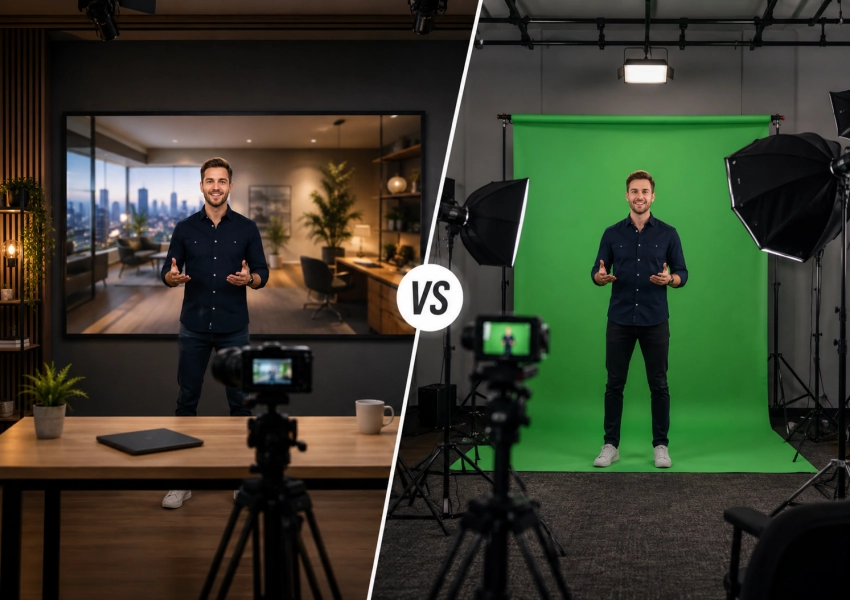
A small studio cannot buy its way out of a bad workflow. A green screen can fit in a spare room and leaves a great deal to postproduction. A smart display creates a visible background in the room but demands wall space, camera testing, power, calibration, and a more deliberate content pipeline. The better return is not decided by the first quote. It depends on what the studio shoots every week, how much work arrives after the camera is packed away, and whether the setup can be used often enough to justify its footprint.
This is a small-studio decision, not a scaled-down version of a large film volume. The useful comparison includes room depth, ceiling height, camera position, product reflections, presenter content, simple multi-camera work, editing capacity, and the kind of client revisions that cause repeated shoots. A studio LED screen can earn its place when it removes recurring friction. It can also become an expensive background if the room or production mix does not support it.
Begin With the Work the Studio Actually Sells
Interviews, product demonstrations, training clips, podcasts, social ads, livestreams, e-commerce videos, and virtual calls each place different demands on a background. A small virtual production studio that mainly shoots talking heads may benefit from a compact, well-controlled LED wall. A studio producing complex key-heavy visual effects may still prefer green screen because backgrounds will be rebuilt after the shoot.
Also separate recurring formats from one-off experiments. A smart display becomes more useful when the same camera marks, content templates, lighting positions, and crew roles come back every week. A green screen keeps the room lighter and more flexible for many post-built scenes. Neither choice is automatically modern or economical. It is the amount of repeatable work that starts to determine virtual studio ROI.
Measure the Room Before Comparing Hardware
Room depth controls much of the decision. The camera needs distance from talent, talent needs distance from the display or key surface, and the background needs enough width to survive reframing. A small room can make a wide LED wall feel close and expose pixels or unwanted reflections. It can also make green-screen lighting difficult because the subject is too near the background. Mark the intended lens position, talent position, camera height, and background edge with tape before pricing any system.
Compare On-Set Time With Post-Production Time
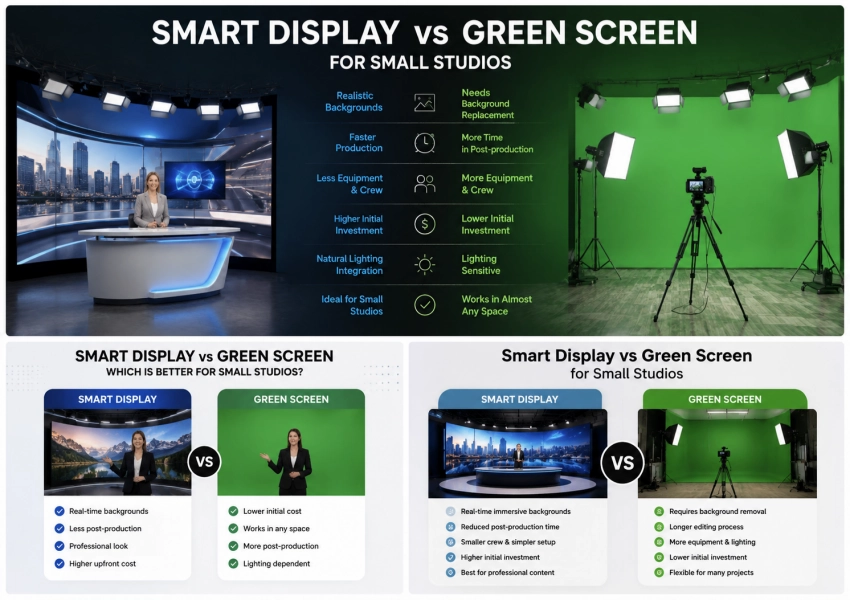
Green screen studio costs often begin low because the visible setup is simple. The work shifts later: keying hair and transparent objects, correcting spill, matching shadows, tracking movement, integrating reflections, and responding to background changes after the shoot. That can be a sensible trade for projects that need major digital manipulation. It is less attractive for a small team whose editors are already the production bottleneck.
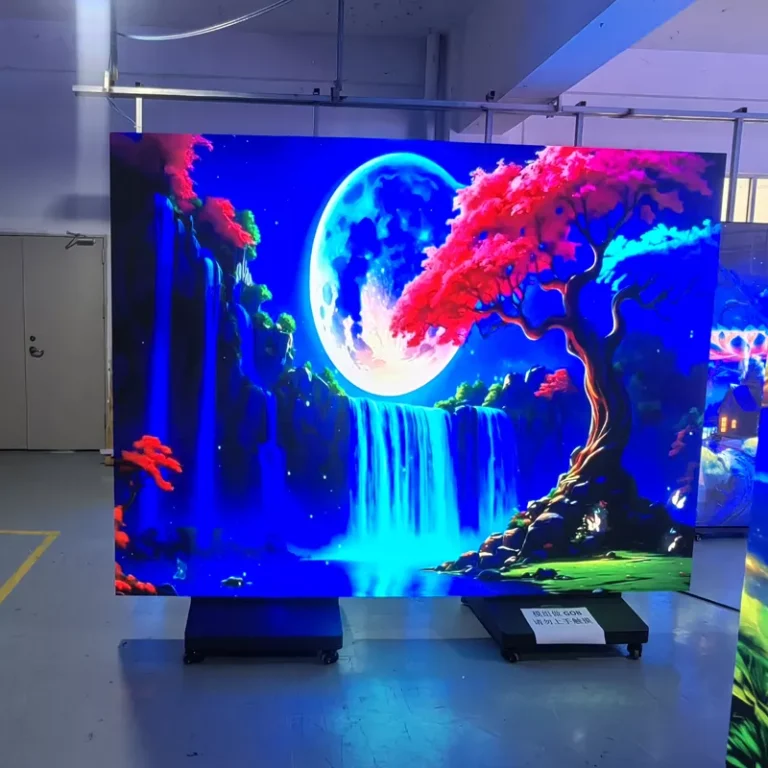
A smart display shifts more work into pre-production and the shooting day. Backgrounds must be prepared at the right aspect ratio, mapped to the screen, tested through the camera, and approved before recording. In return, the presenter, client, and director can see the scene though the lens. Product packaging, glossy surfaces, glasses, and metallic details may pick up practical color and reflections rather than relying entirely on a later composite. The benefit is strongest when fast approvals matter.
Treat Camera and Lighting Tests as Part of the Purchase
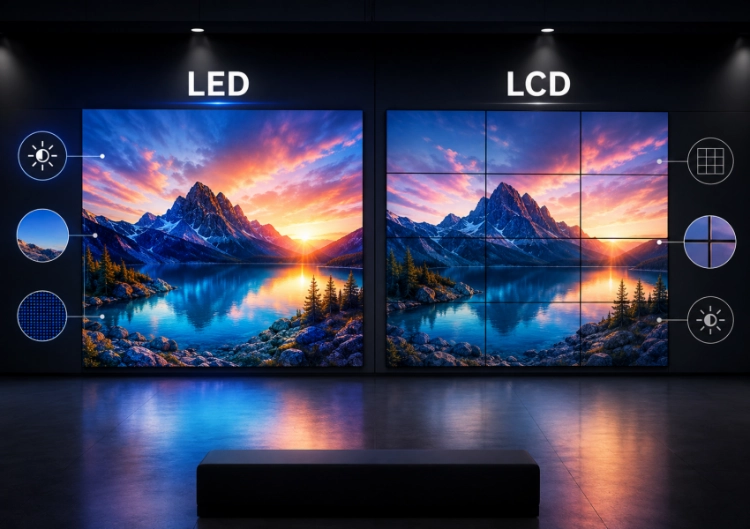
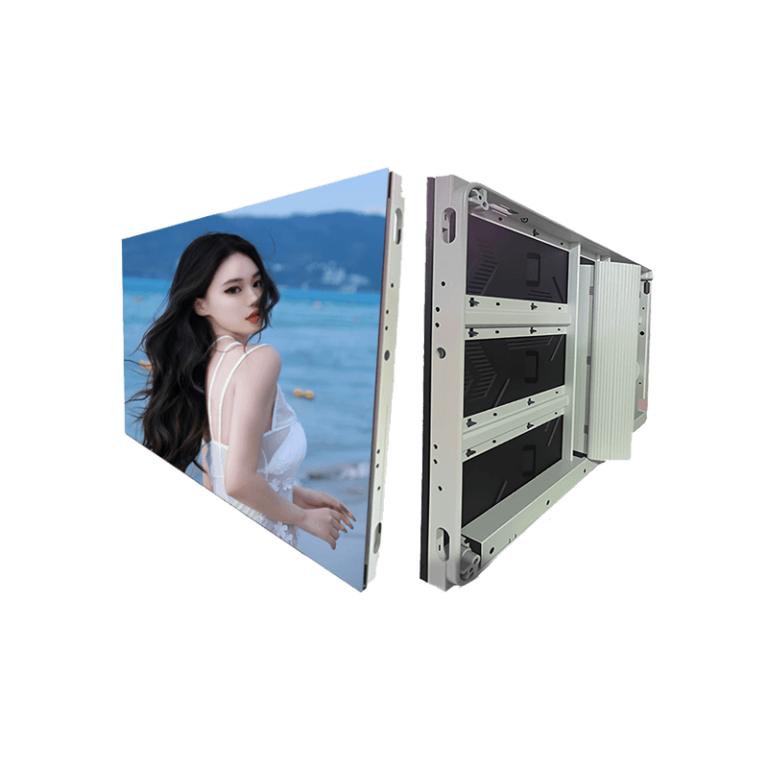
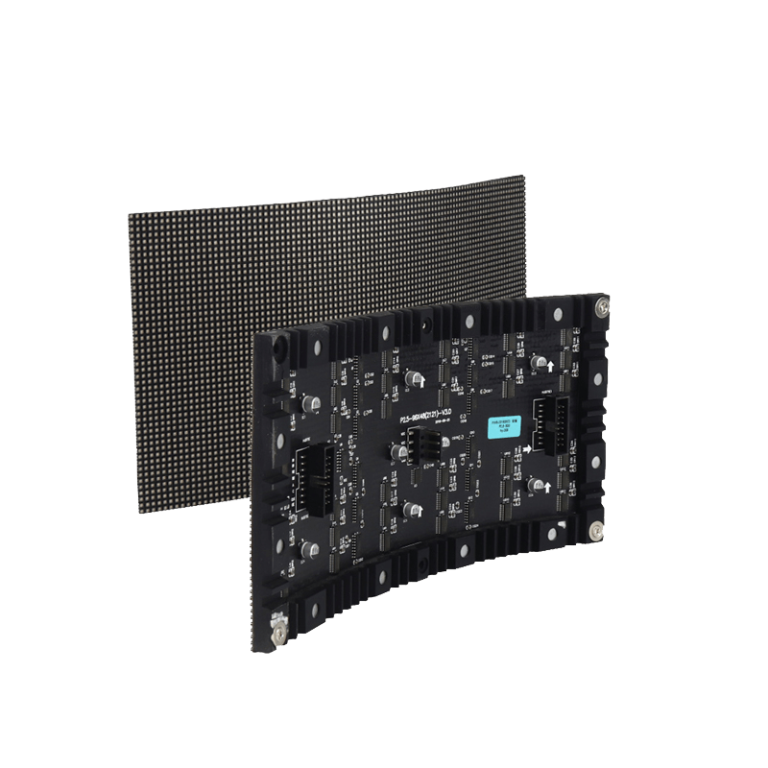
An LED wall for small studio use should not be selected by pitch alone. Check refresh behavior, scan configuration, brightness range, processor settings, color consistency, viewing angle, camera shutter, lens distance, and planned content. Leyaled has indoor fine-pitch formats and configurations with 3,840 Hz or 7,680 Hz refresh options, controlled indoor brightness, die-cast aluminum cabinets, and wide viewing angles. Those figures are starting points, not a promise that every camera setting will behave identically.
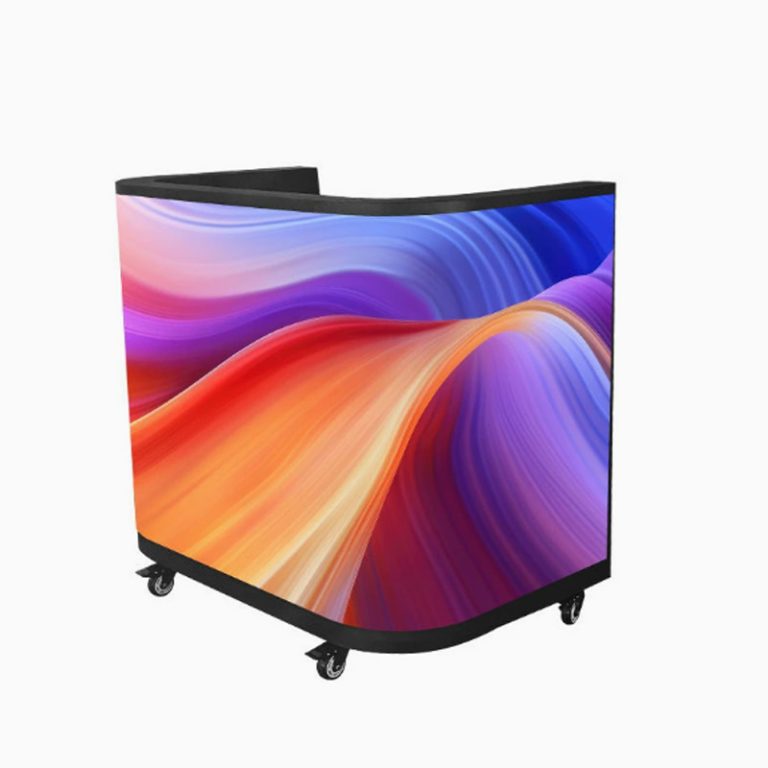
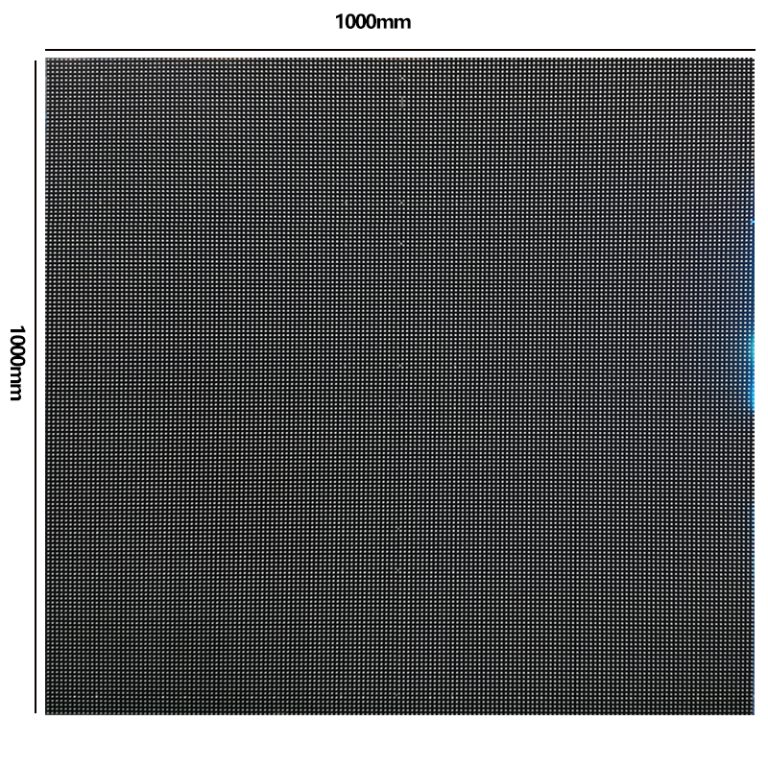
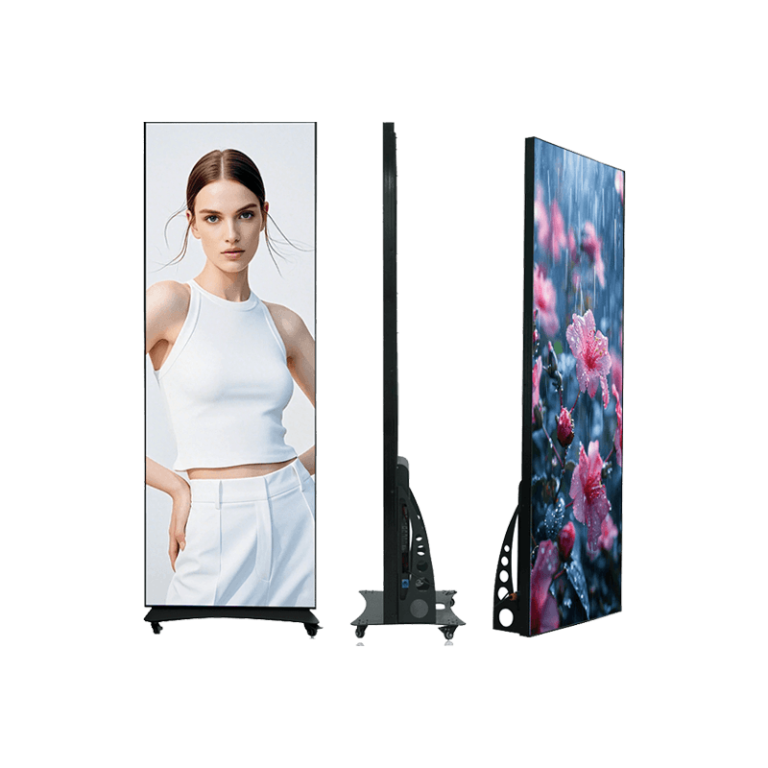
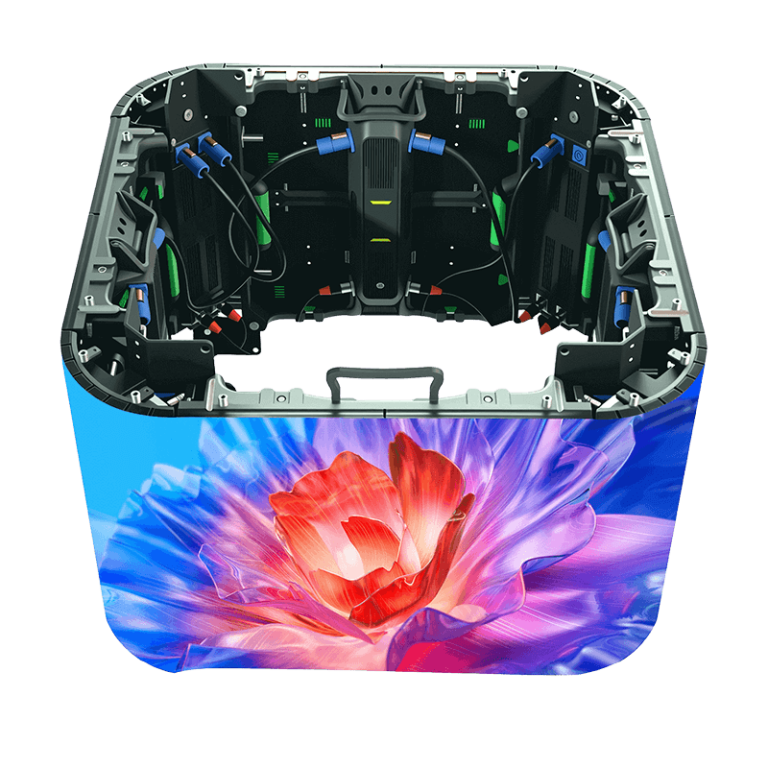
Arrange a camera test with the real lens and a representative subject. Film skin tones, a reflective product, high-contrast graphics, a slow pan, and the intended exposure. An kapalı P1.86 display can be relevant for close framing, while kapalı P3.91 display options ve bir alüminyum profil NEDEN OLMUŞ görüntülemek show other cabinet paths to compare. The smallest pitch is not automatically the best investment. A coarser screen can work for wider shots and leave more budget for content, processor, lighting, and sound treatment.
Keep the Wall From Taking Over the Room
Small studios need circulation space, cable routes, quiet cooling, service access, and a safe place to store backgrounds or accessories. The wall should not block the only entrance or force talent against the camera. Confirm power demand with a qualified installer and plan for a controlled brightness level rather than running an indoor wall at its maximum output. The screen is a lighting source as well as a picture source, so it changes the whole set.
Calculate ROI From Repeated Friction, Not a Fantasy Revenue Number
Virtual production setup cost includes the display, structure, controller, power distribution, installation, content preparation, camera testing, spares, calibration, and future services. Green screen includes fabric or cyc work, lighting, tracking where needed, post-production labor, storage, and reshoots caused by a weak composite. Do not invent a payback period from a single project. Instead, count the repeatable hours a new setup removes across a normal month.
For example, a display may reduce background rebuild time, client review rounds, practical reflection work, or travel for recurring branded scenes. Green screen may avoid buying and maintaining a wall when the studio shoots only occasional virtual scenes. Add the utilization rate, editor hours, client turnaround requirement, maintenance allowance, and the chance of a reshoot. Then test a conservative and a busy-month case. That reveals the break-even boundary without pretending that all studios earn the same way.
Choose the Setup That Fits the Team
Choose green screen when the team has strong compositing capacity, backgrounds change radically after capture, room space is tight, or virtual work is occasional. Choose a smart display when the studio repeatedly shoots presenter-led or product-led content, values live client review, needs practical reflections and scene color, and can maintain a repeatable camera and content routine. Hybrid studios can use both, reserving the LED wall for formats that benefit from it.
For the later specification stage, Leyaled can support a discussion about indoor pitch, cabinet arrangement, calibration, service access, and a filmed acceptance test. Leyaled also has temperature and brightness-decay testing before shipment. Ask for configuration-specific evidence, spare guidance, and the support boundary. A studio LED screen earns better ROI when the room, crew, camera, and content calendar all keep it busy.
SSS
Q1: Is a smart display always better for a small studio?
A1: No. It is strongest for repeated camera-facing formats that benefit from live backgrounds and practical light. Green screen can be better for occasional or heavily composited work.
Q2: What makes an LED wall suitable for close studio shots?
A2: Test pitch, refresh behavior, scan configuration, brightness, color, lens distance, content, camera shutter, and reflections together. A datasheet alone cannot replace the test.
Q3: How should a small studio estimate ROI?
A3: Compare recurring hours saved or added, utilization, setup and post work, content preparation, maintenance, and reshoot risk under conservative and busy monthly scenarios.