Control rooms are not ordinary display environments. Operators may watch maps, camera feeds, alarms, dashboards, and incident information for long periods. A command center display has to support rapid scanning without turning minor screen boundaries, color shifts, or downtime into a daily irritation. That is why the LED vs LCD video wall decision is shifting in many projects, especially where a continuous canvas and flexible wall size matter.
Fine-pitch LED is not automatically the right replacement for every LCD wall. LCD can still be practical for moderate screen sizes, familiar desktop-like content, and projects with a tightly defined budget. The change happens when the cost of bezels, layout limits, replacement logistics, or a visible fault begins to outweigh the initial saving. The buyer needs to compare the whole operating environment, not only the display purchase price.
Why Seams Matter in Operational Viewing
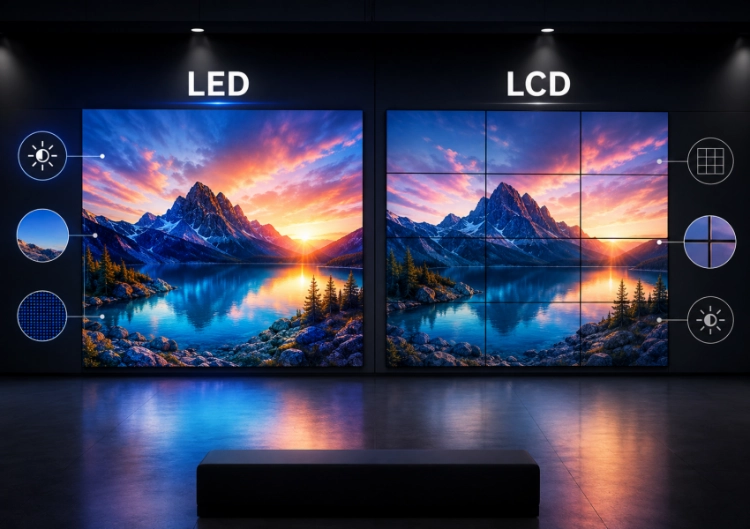
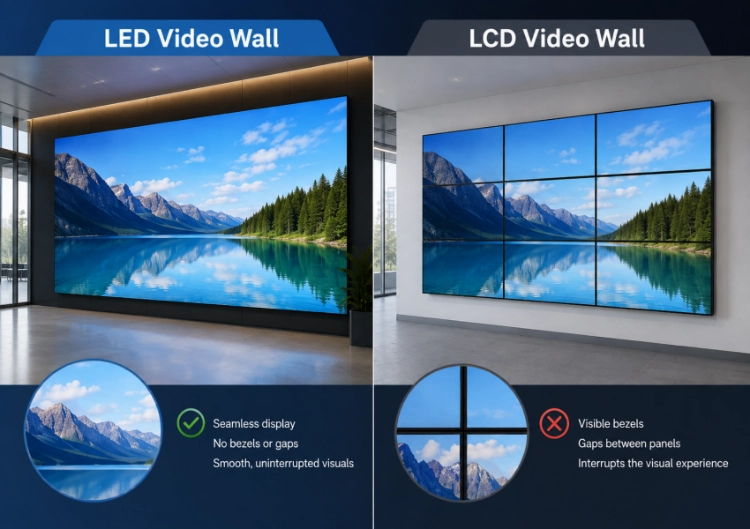
An LCD video wall is built from separate panels. Even narrow bezels create physical boundaries across maps, video feeds, charts, and scrolling content. Operators can work around them, but those lines become more noticeable when a critical object crosses a join or when the layout changes frequently. A fine pitch LED display forms a more continuous image surface, which can make a large visual canvas easier to scan.
Seamless does not mean maintenance-free. LED cabinets still need careful alignment, calibration, matched modules, and a service plan. If flatness or color consistency is poor, a large plain background can reveal cabinet boundaries of a different kind. The benefit comes from a well-specified system that maintains image continuity in normal operation, not from the word “seamless” alone.
Resolution Must Match the Desk Position
Fine pitch is especially relevant when operators sit close to the wall or read small system labels. In a deeper room where most people view large geographic or camera content from farther back, extra pixel density may add limited value. Start with the nearest normal console position, the main viewing line, and the smallest item that has to be read reliably.
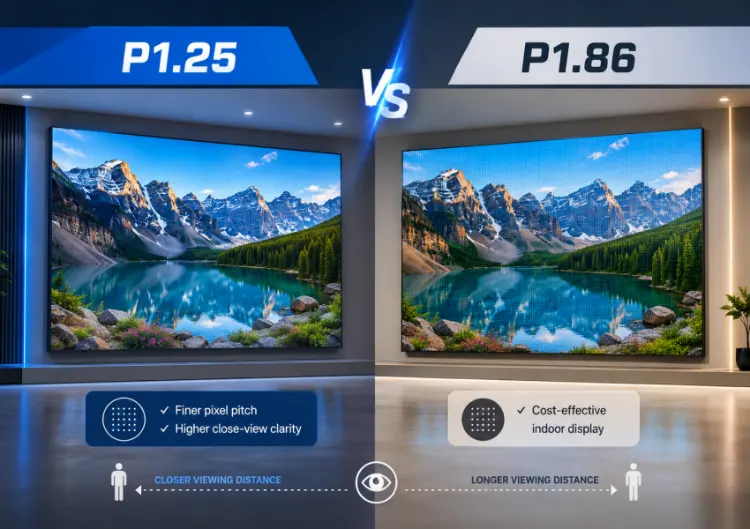
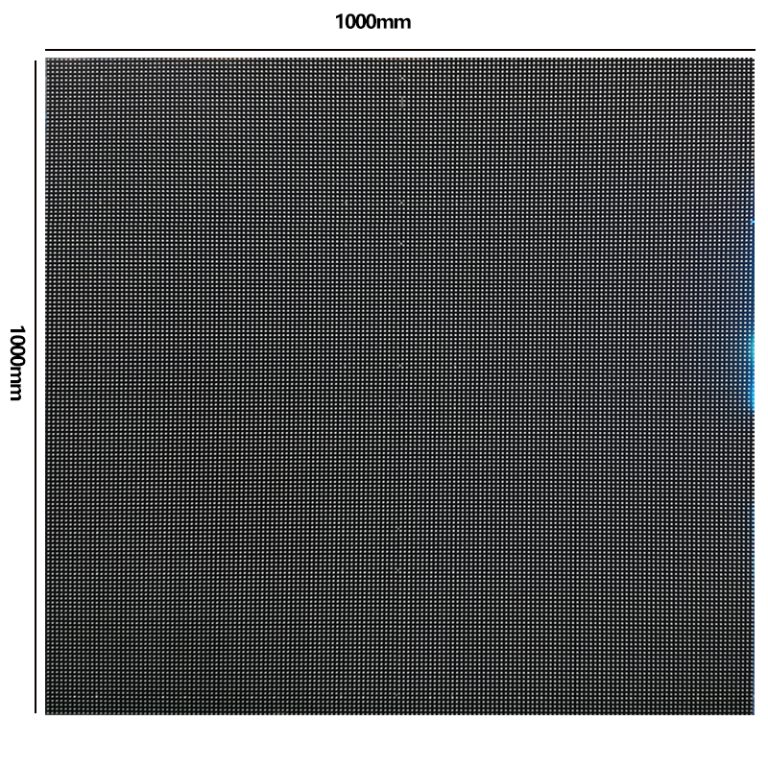
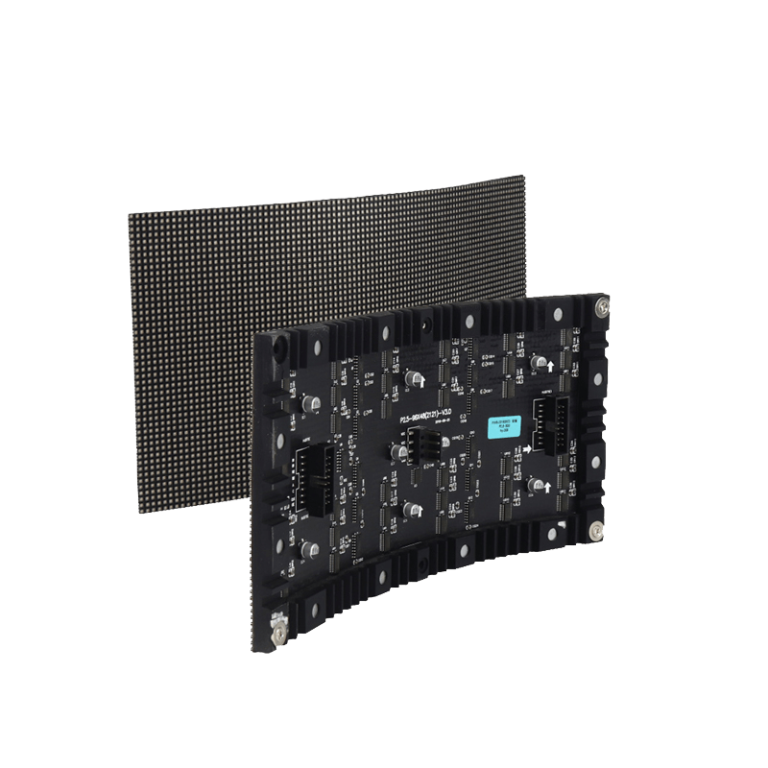
Leyaled reference configurations put P1.56 and P1.86 in the indoor fine-pitch range, with different pixel densities and approximate viewing ranges. These are useful comparison inputs, but a command center should validate them with its own interface. Small type, thin map layers, dark color palettes, and white-on-grey alarm labels are tougher than a promotional video.
Compare Image Behavior, Not Just the Panel Type
LCD and LED have different visual strengths. An LCD can give familiar desktop-style sharpness in a smaller matrix, while an LED wall gives freedom to build a larger, non-standard canvas with fewer hard divisions. The LED system should be assessed for low-brightness grayscale, color uniformity, viewing angle, refresh behavior, and source scaling. Pixel pitch alone does not decide whether a control room LED wall is comfortable to use.
Test the full layout: live camera feeds, satellite or mapping data, text alarms, dark user interfaces, spreadsheets, and a video conference. Watch the wall from the primary seats and side angles. Ask operators to use it for an extended session, not only a five-minute demonstration. Fatigue, glare, and an over-bright screen often reveal themselves after the showroom effect has worn off.
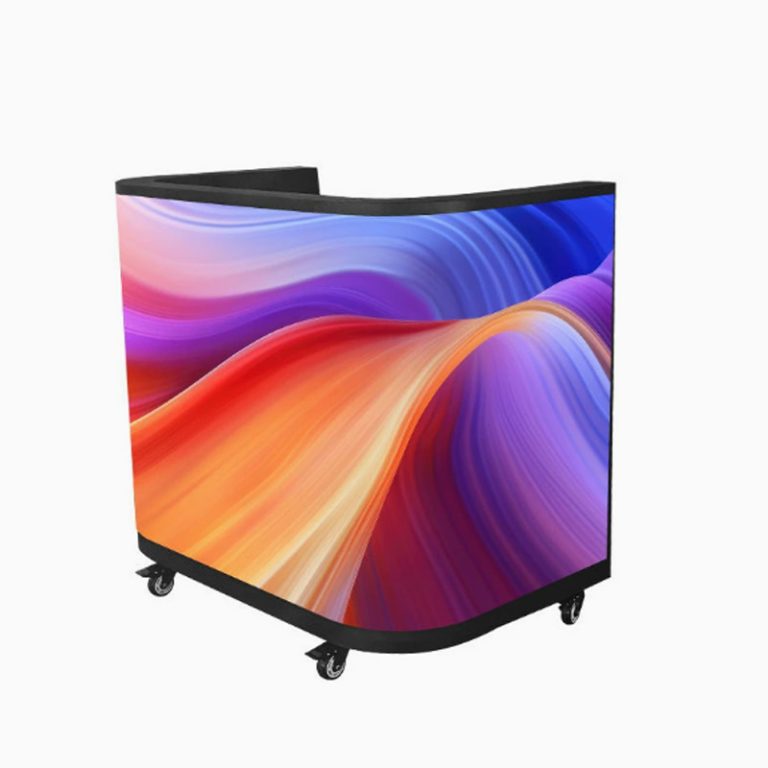
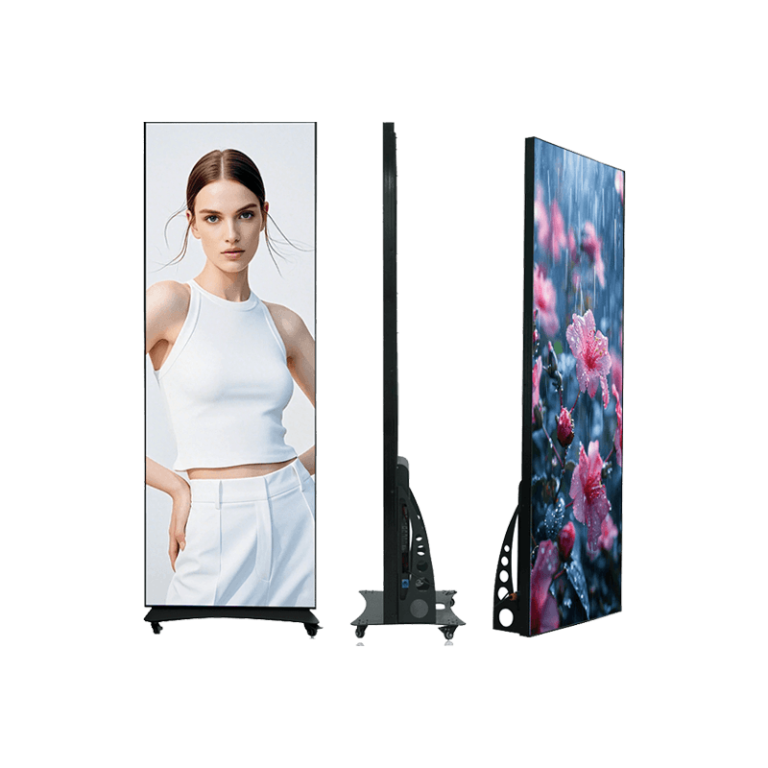
หนึ่ง จอแสดงผล P3.91 ภายในอาคาร illustrates how a larger-pitch indoor product belongs to a different distance and content scenario. It should not be treated as a close-console substitute simply because it is an indoor wall. The actual command center display needs a room drawing, source-resolution map, and sample test that match the operator desks.
Maintenance and Redundancy Change the Cost Picture
Every large display needs a fault plan. LCD walls may require panel replacement, bezel alignment, and brightness or color matching over time. An LED wall needs matched spare modules, a documented calibration process, cabinet access, and a way to isolate a fault without taking the whole canvas offline. The practical question is which task the site team can perform with the least disruption.
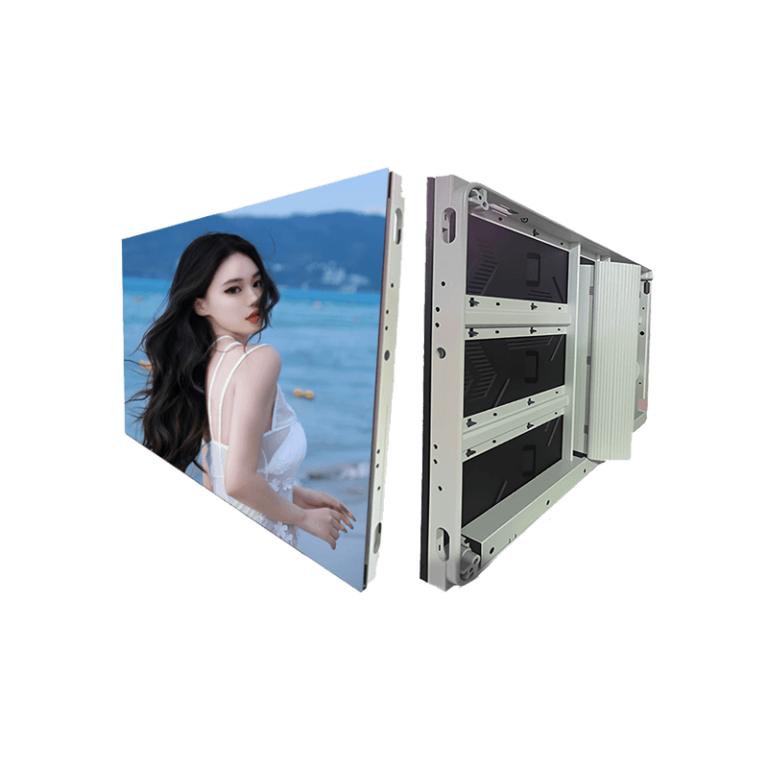
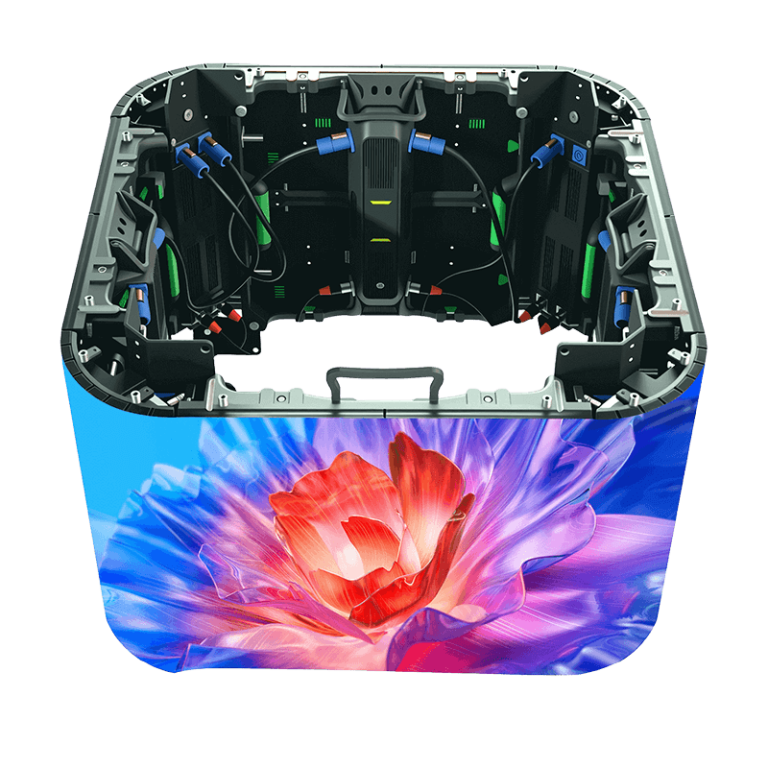
Confirm front or rear service before choosing the wall structure. Check whether there is a maintenance corridor, how a failed module is identified, who holds the calibration data, and how replacement stock is stored. A profile-body LED display may be relevant where the cabinet profile and mounting depth are critical, but the exact service direction and installed structure need written confirmation in the RFQ.
Redundancy needs similar discipline. Content processors, signal routes, power circuits, and network links may be as important as the display itself. A redundant item should be tested as part of commissioning rather than listed as a vague option. The acceptance process should include an input switch, a processor restart, a single-module replacement scenario, and a record of the settings used to restore the image.
Use the Wall as Part of the Room Workflow
The display layout should follow decision-making, not simply fill the largest possible wall. A control room may need a persistent map, priority camera feeds, alarm panels, briefing windows, and a shared incident view. Those elements should be assigned stable zones and tested at the native resolution of the source systems. Scaling a small desktop interface across a large wall can make the display expensive without making information easier to read.
Brightness needs the same restraint. Long operating hours generally call for a comfortable room level rather than maximum light output. Ask for brightness adjustment, stable low-level grayscale, and a process for locking the approved display settings. If the wall is watched on a broadcast camera during an incident review, include a camera check; refreshed and scanned behavior can become visible through a sensor even when the wall appears steady in person.
Choose With a Lifecycle Test, Not a Catalogue Comparison
Build a side-by-side scorecard for screen seams, content readability, nearest viewing distance, room depth, operating hours, service access, replacement procedure, processor redundancy, and future expansion. Then ask the display supplier to quote the exact cabinet, pitch, service method, and spare package. Avoid fixed claims about lifespan, brightness, or return on investment unless the quoted configuration documents them.
ที่ control center display route can support a discussion about application requirements, while เลียลเลด provides the broader product context. A fine-pitch LED display replaces LCD video walls most convincingly when it removes a real operational limit: a broken-up canvas, inadequate wall size, difficult layout changes, or an unacceptable recovery path. Where those limits are modest, LCD may remain the more sensible choice.
คำถามที่พบบ่อย
Q1: Is a fine pitch LED display always better than an LCD video wall in a control room?
A1: No. Fine-pitch LED is strong where a seamless large canvas, flexible wall size, and close operational viewing matter. LCDs can still fit smaller or budget-limited rooms with clear panel-layout needs.
Q2: What should be checked before replacing an LCD wall?
A2: Check console distance, source resolution, small-text readability, wall structure, service access, calibration, spare modules, processor redundancy, room brightness, and recovery procedures.
Q3: Can an LED control room wall show cabinet seams?
A3: Yes. Poor flatness, calibration, alignment, or a mismatched replacement module can become visible. Acceptance testing must cover uniformity and real operator content, not only a bright demo loop.